Recent Posts

Amish Harvest Tomatoes: Enjoy Your Fresh Tomatoes With This Amazing Recipe


Amish Harvest Tomatoes: Enjoy Your Fresh Tomatoes With This Amazing Recipe

Discover the delightful charm of an authentic Amish delicacy with our easy-to-make Amish Harvest Tomatoes. This farm-favorite dish showcases the rich, ruby red tomatoes immersed in a tangy and lovingly crafted homemade marinade. Whether you have a flourishing garden of homegrown tomatoes or you decide to pick up the vibrant beauties from the local Amish market, this healthy salad perfectly complements any of your favorite main courses. Prepared with heart and tradition, these Amish Harvest Tomatoes are guaranteed to win the hearts of your entire family with their irresistible flavors and family-style appeal.

The Amish community is renowned for its commitment to living a simple and wholesome lifestyle, and this philosophy is also reflected in their traditional culinary delights. One such culinary gem is the Amish Harvest Tomatoes recipe – a farm favorite that celebrates the bountiful harvest of ruby red tomatoes. Bathed in a tangy homemade marinade, this healthy and delicious salad is a true testament to the Amish way of life and their appreciation for fresh, homegrown produce.

A Heritage of Simplicity: The Amish Way

The Amish people, known for their strong sense of community and adherence to tradition, have long maintained a way of life that cherishes simplicity and self-sufficiency. This cultural ethos extends to their culinary practices, where fresh, locally grown ingredients are preferred over commercially processed alternatives. The Amish Harvest Tomatoes recipe perfectly encapsulates this approach, using nature’s bounty to create a dish that is both flavorful and nourishing.

The Star Ingredient: Ruby Red Tomatoes

At the heart of the Amish Harvest Tomatoes recipe lies the star ingredient – ruby red tomatoes. Whether plucked from the garden of an Amish homestead or sourced from the bustling Amish markets, the tomatoes used in this recipe are always fresh and ripe. The vibrant red hue of these tomatoes is a testament to their rich antioxidant content, making this salad not only delicious but also packed with health benefits.

The Tangy Homemade Marinade: A Flavorful Fusion

What truly sets the Amish Harvest Tomatoes recipe apart is the tangy homemade marinade that bathes the tomatoes. Simple yet tantalizing, this marinade combines a harmonious fusion of flavors, creating a symphony of tastes that dance on the palate. The exact blend of ingredients may vary slightly from one family to another, but common components include apple cider vinegar, honey, olive oil, minced garlic, and a sprinkling of fresh herbs. The marinade infuses the tomatoes with a burst of tanginess that complements their natural sweetness, making every bite a delightful journey of flavors.

Embracing Seasonality: Homegrown vs. Market-Fresh Tomatoes

One of the beautiful aspects of the Amish Harvest Tomatoes recipe is its adaptability to the seasons. During the warm summer months, homegrown tomatoes take center stage, straight from the fertile soil of Amish gardens. The care and attention given to cultivating these tomatoes imbue them with unmatched freshness and taste. As the seasons change, and summer turns to fall, the Amish community turns to the local markets, where ruby red beauties are still found in abundance. Regardless of the source, the focus remains on using the freshest and ripest tomatoes available.

A Versatile Accompaniment: Pairing with Main Dishes

The Amish Harvest Tomatoes salad is a versatile dish that pairs effortlessly with a wide array of main courses. Whether it’s a hearty farm-style roast, a tender grilled chicken, or a comforting bowl of homemade stew, these tomatoes add a burst of freshness and tanginess to every meal. Their ability to complement various flavors and textures makes them a favorite choice for Amish families during both daily meals and special gatherings.

A Family-Style Hit: Creating Lasting Memories

The Amish Harvest Tomatoes recipe not only delights the taste buds but also fosters a sense of togetherness and community. In Amish households, preparing this dish often becomes a cherished family affair, with each member contributing their unique touch to the marinade or sharing stories while slicing the tomatoes. The act of savoring the final creation at the dining table becomes an opportunity to bond and create lasting memories.

Ingredients

  • 3 large tomatoes, cored and cut into 1-inch chunks
  • 1 large onion, cut into thin half-moon slices
  • 1/2 cup vegetable oil
  • 1/2 cup apple cider vinegar
  • 1/3 cup sugar
  • 1 teaspoon dried Italian seasoning
  • 1 teaspoon salt
  • 1/4 teaspoon black pepper

Directions

  • In a large bowl, combine tomatoes and onion; set aside.
  •  In a small bowl, whisk together oil, vinegar, sugar, Italian seasoning, salt, and pepper until sugar is dissolved.
  • Pour over tomato mixture; mix well. 
  • Serve or cover and chill until ready to serve.

The Amish Harvest Tomatoes recipe stands as a testament to the Amish way of life – embracing tradition, simplicity, and the goodness of nature’s bounty. Whether using homegrown tomatoes nurtured with love or selecting the finest ones from the Amish market, this tangy and flavorful salad is a celebration of the harvest season and a reflection of the close-knit Amish community. So, why not embark on this culinary journey and experience the heartwarming taste of Amish tradition with the Amish Harvest Tomatoes recipe?

What Are The Difference Between The Amish & The Horse And Buggy Mennonites?


What Are The Difference Between The Amish & The Horse And Buggy Mennonites?

What Are The Difference Between The Amish & The Horse And Buggy Mennonites?

Name three differences between the Amish and the Mennonites. Well, that’s a very hard question to answer. Since there are hundreds of different Amish communities and Mennonite communities across America. There are many different forms of Amish and many different beliefs among the Mennonites and customs. And so I will try to give some insight into the difference between the Arthur Illinois Amish and the horse and buggy Mennonites that live in the Pen Yan New York area.

It’s the Finger Lakes area of New York. It’s a very beautiful spot. And first we’ll go over some of the customs and things at the Amish in Art Arthur, Illinois. It’s located in central Illinois.

They have fairly large Amish community here. And first thing you notice is that the Amish men have beards and they wear plain colored clothes. They usually wear suspenders and homemade pants, and then they wear large black felt hats. They, of course, drive horse and buggy, and they also farm with horses, those that farm.

The women wear plain long dresses with capes and large white coverings with strings. The young girls also wear coverings in their homes. They have no electric or phones in their homes. Some businesses do have telephones for their businesses, and if they want to go out of state or any distance, they will hire a driver. They also, they own cabinet shops, bulk food stores, hardware, and many other types of businesses.

They have their churches in their homes, but they do have their own school houses, and they speak Pennsylvania Dutch, and English.

To compare that with the horse and buggy Mennonites in the Penn Yan New York area. The men do not wear beards. They do wear suspenders and they do wear jeans and pants that are bought. Then they either wear a tan straw hat or a black derby type of hat. And the ladies all wear very modestly dressed, but they have a pattern in their material. They’re not plain material.

They wear similar coverings and most of them cover the ear. Most of the younger girls do not wear coverings. But lot of ’em, have their hair in two pigtails and we’re also very modestly dressed.

Same as Illinois, they drive horse and buggy, but they are allowed to farm with steel wheel tractors. Any piece of equipment that is self propelled has to be on steel wheels. The reason for that is so they are not tempted to drive them to town. You cannot have steel wheels on the highway.

They’re also a little more modern as far as their homes. They have electricity in their homes and telephones, and they also hire drivers to go out of state or any long trips.

They’re very industrious and they have many dairy farms. They grow grapes and own a lot of the businesses in the area.

Unlike the Illinois Amish, they have their own church houses, but they also they have their own school houses, and then they also speak Pennsylvania Dutch, and English.

The problem with this question is that, you know, when you say Mennonite, it can be many different things. If you say Amish, you have a pretty clear picture of what you mean. You mean someone plain clothes, a beard or a prayer covering on their head using a horse and buggy using very low or restricted levels of technology.

When you say Mennonite, now that can mean a variety of types of people. You can be anything from a very modern person who uses computer, the internet, cars, and would be indistinguishable visually from, most other Americans. Mennonite can also be someone who also uses a horse in buggy as their primary transportation. That also wears plain clothing, that also speaks Pennsylvania German and that also restricts the use of technology. As you know, a lot of things in common with the Amish.

There’s a lot of range in the churches that use the word Mennonite to describe themselves. So the Amish and Mennonites a couple other groups, the Hutterites, they all share a similar history. They come from a group known as the Anabaptists. Both come from that background in their history.

There was a division, and you had a certain group of followers that followed the leader of Jacob Amman eventually became known as the Amish. They were kind of the more plain and more traditional groups there.

Over time, you’ve had, even within the Amish groups, some that have become more modern and progressive, some churches that have eventually become car driving churches. In contrast to that, you have the Old Order pathway.

When we talk about the Amish today, we generally talk about the Old Order Amish. So the further you get away in those terms, the fewer similarities of Mennonites would have with Old Order Amish.

So the groups that are most similar to the Amish within the Mennonites would be the Old Order Mennonites. And also you could include the Old Colony Mennonites.

The Old Order of Mennonites are significantly smaller group than the Amish, but you’ll find them living side by side just as neighbors with the Amish in certain communities, one would be Lancaster County. There’s a very large old order of Mennonite community there.

You’ll see the Amish and Mennonite Old Order Mennonites living side by side in some places. They also wear plain clothing, though it’s a different style than the Amish. The women wear head coverings, prayer coverings. They use the horse and buggy drive similar buggies to the Amish. Older Mennonite buggies will be a different style. In Lancaster County, you can tell it’s an Amish buggy. By its color, it’s a gray color.

And then the Mennonite buggies there would be black, kind of a little bit different design. They also use restricted levels of technology. The older Mennonites also speak Pennsylvania German as well. So the Amish mission and Mennonites have that in common.

The Old Order Mennonites also cooperate with the Amish in certain ways. They’re culturally close to one another. So you may have things like joint auctions. Certain school houses in Lancaster County are essentially joint Amish and Mennonite schools. So you’ll have children that are Amish and then also plain Mennonites attending those schools.

There are also some conservative Mennonites like Black Bumper Mennonites. And some of those children may also attend those schools. You even have some shared cultural aspects in forms of recreation specifically there as a game called Corner Ball.

That’s a game that I had a chance to witness on one occasion. And it’s basically kind of like a game of dodge ball where you have two teams and they try to hit one another with kind of like a hard ball. I hear the ball can hurt pretty pretty badly if you get hit. And it was Amish teams versus Mennonite teams. And there was, you know, quite a few spectators there.

The Old Order Mennonite men do not grow facial hair, and the Amish men do grow the beard, and they see there’s a biblical basis for that. Another one would be the place of worship.

Steve-Guttman-NYCFlickr.

Now, the Old Order Mennonites will worship in a meeting house. A specially built structure made for worship. Most Amish will worship in the home. It could be in the basement of the home. They have their church gathering there, or in a workshop or another building, even the barn.

Another difference there would be the church structure. The Amish church district, which typically is made up of about 25 to 35 families, somewhere around 150 people total. Each district will have typically its own bishop ministers and a deacon.

Those are some of the differences there. But they tend to be culturally quite alike. So, you know, you’ll see the Amish and the Mennonite cooperating on different things, and they’re gonna be able to relate to each other on the same level.

They have a shared history. They have shared faith essentially. Now, the Old Colony Mennonites are a group that are primarily found in Mexico. They’re found in Belize. Some are located in Canada. There are even a few in the United States, some in other Latin American countries, but the bulk of them would be in Mexico.

This is a group which also uses highly restricted technology. You know, they have differences in their style of plain clothing. They don’t wear beards either. Some of the Old Colony Mennonites do permit and use automobiles, although some do use horse drawn transport. They also speak a different dialect of German.

They often live in significant poverty as well. And there’s been an interesting project where Amish from states like Ohio, Pennsylvania, other places have been going down to Mexico to help teach in Old Colony Mennonite schools. There been a long tradition of Amish doing that now for over two decades.

Old Order Mennonites, Old Colony Mennonite, these are two groups that have similarities with the Amish culturally, and also I would say probably mentaly as well.

When you ask the question, “what’s the difference between the Amish and the Mennonites?” I would say, “Well, “what group of Mennonites are you talking about? Right?”

The plainer Mennonites, are more similar to the Amish. Even in the very ways they live. But even some of the more conservative Mennonites that are car driving would feel like an affinity or like closeness to one another kind of a cultural similarity. Even though one would drive a car, they may still dress in plainer clothing and have plainer ways.

The range within Mennonites is even greater in terms of diversity. You have all the way from horse and buggy driving Mennonites to modern car driving professional people. You have university professors that are Mennonites. You have doctors that are Mennonites. That’s another difference, the more progressive Mennonites will have a higher level of education. They permit a higher level of education, which the Amish don’t. They stop at in eighth grade.

I hope that answers that question.

Amish Cast Iron Peach and Blueberry Cobbler with Ginger Biscuits


Amish Cast Iron Peach and Blueberry Cobbler with Ginger Biscuits

Nothing quite captures the essence of comfort food like a homemade cobbler, and when it’s made in a cast iron skillet, it takes on an extra dose of rustic charm. The Amish Cast Iron Peach and Blueberry Cobbler with Ginger Biscuits is a delightful twist on a classic dessert that combines the sweetness of peaches and blueberries with the warmth of ginger-infused biscuits. This irresistible treat is a perfect way to showcase the flavors of summer and bring a taste of the countryside to your table.

The Amish community has a long-standing tradition of using simple, wholesome ingredients in their recipes, and this cobbler is no exception. By combining fresh, ripe peaches and plump blueberries, you can enjoy the best of both fruits in a single dish. The juicy peaches add a delightful sweetness, while the blueberries lend a vibrant burst of flavor that perfectly complements the ginger-infused biscuits.

The aroma of warm peaches and blueberries mingling with the ginger will fill your kitchen and entice everyone nearby.

Ingredients

Peach Cobbler

  • 4 cups peaches firm, ripe, pitted and sliced
  • 3 cups blueberries fresh, washed and dried
  • ¼ cup granulated sugar
  • 1 tablespoon lemon zest freshly grated
  • 1 tablespoon cornstarch

Ginger Biscuitss

  • 1 cup all purpose flour
  • 1 tablespoon granulated sugar
  • 1 teaspoon baking powder
  • ½ teaspoon baking soda
  • ½ teaspoon salt
  • 2 tablespoons unsalted butter COLD; cubed
  • ⅓ cup crystallized ginger chopped into fine pieces
  • 6 tablespoons + 2 teaspoons buttermilk divided
  • 2 teaspoons turbinado sugar

Directions 

Fruit Cobbler

  • Place a medium cast iron skillet in the oven; preheat to 425°F.
  • Combine peaches, blueberries, 1/4 cup granulated sugar, lemon zest, and cornstarch in a large bowl and stir gently. Carefully remove the hot pan from the oven and coat with cooking spray. Add the fruit mixture. Cover loosely with foil. Bake until the peaches are starting to soften, about 15 minutes.

Ginger Biscuits

  • Whisk all-purpose flour, granulated sugar, baking powder, baking soda and salt in a medium bowl. Using your fingertips, rub butter into the dry ingredients until crumbly.
  • Add crystallized ginger and use your fingers to separate the tiny pieces from sticking to one another.
  • Make a well in the center and gradually pour in 6 tablespoons buttermilk, stirring with a fork, until just combined and no streaks of flour remain.
  • Using a large spoon, drop 6 equal-sized spoonfuls of biscuit batter on top of the hot fruit mixture.
  • Brush the tops with the remaining 2 teaspoons buttermilk and sprinkle with turbinado sugar.
  • Bake, uncovered, until the biscuits are golden brown, about 15 minutes more. Let cool for about 30 minutes before serving.

Once the cobbler is done, remove it from the oven and let it cool for a few minutes before serving. The warm, tender ginger biscuits and the juicy, sweet fruit combine to create a delightful harmony of flavors. Serve the cobbler with a scoop of vanilla ice cream or a dollop of freshly whipped cream for an extra indulgence.

The Amish Cast Iron Peach and Blueberry Cobbler with Ginger Biscuits is a dessert that celebrates the simplicity and richness of homemade cooking. From the tender peaches and blueberries to the comforting warmth of ginger, every bite is a reminder of the joys of gathering around the table and savoring a delicious, homemade treat.

Whether you’re sharing it with family and friends or enjoying it by yourself, this delightful cobbler is sure to become a favorite in your recipe repertoire. So grab your cast iron skillet, embrace the flavors of the season, and indulge in a slice of this delightful dessert that pays homage to the Amish culinary traditions.

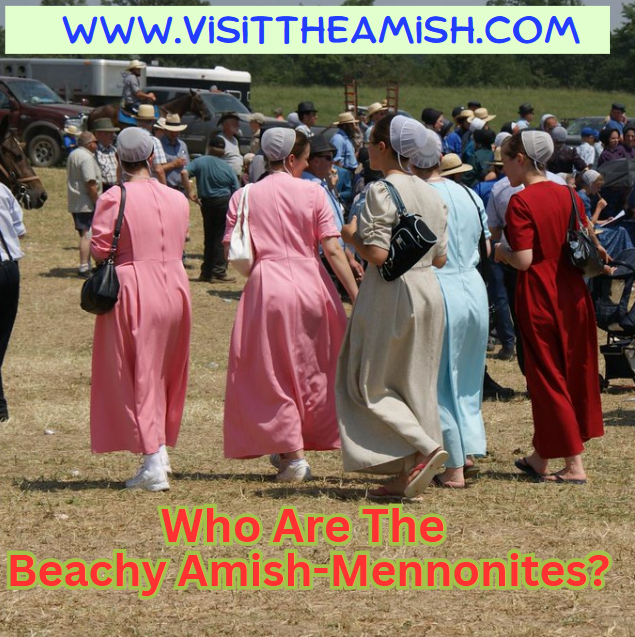
Who Are The Beachy Amish-Mennonites?


Who Are The Beachy Amish-Mennonites

The Beachy Amish-Mennonites are a conservative Mennonite group that originated in the 1920s in the United States. They are often referred to as “Beachy Amish” because of their more relaxed dress codes compared to traditional Amish communities, which allow for the use of brighter colors and more fashionable styles.

The Beachy Amish-Mennonites represent a distinct branch within the Amish-Mennonite community, characterized by their embrace of certain modern conveniences while maintaining their traditional values. Unlike their horse-and-buggy counterparts, the Beachy Amish-Mennonites incorporate car transportation into their daily lives and prioritize community outreach efforts. Just as there are diverse subgroups among the horse-and-buggy Amish, the Amish-Mennonites also exhibit variations in their beliefs and practices.

Although the Beachy faction is the largest among the Amish-Mennonites today, comprising over 50% of the community, there are seven other groups that contribute to the overall diversity. The Beachy Amish-Mennonites utilize automobiles, cameras, and computers while abstaining from radio and television. They adhere to prescribed dress codes and maintain a somewhat evangelical approach to their faith.

Like other Mennonite groups, the Beachy Amish-Mennonites believe in non-violent conflict resolution, adult baptism, and separation of church and state. However, they are more accepting of modern technology and do not strictly adhere to the plain dress codes and technology restrictions of traditional Amish communities.

The Beachy Amish-Mennonites have a strong emphasis on evangelism and outreach, and they operate many mission-oriented organizations and institutions, including colleges and hospitals. They also have a tradition of summer youth programs, which often include outdoor activities and camp meetings.

Beachy Amish-Mennonites

The Beachy Amish-Mennonites have automobiles, electricity in their homes and businesses, and many use the internet. They do not use radios, television or attend movies.

They are evangelistic and also provide a lot of disaster aid services. They generally have their own meeting houses and schools. Their church services include much singing but they eschew musical instruments.

If you ever visit one of their churches, you can expect to be invited to a member’s home for dinner. They are very hospitable and generous.

They are mostly famers, carpenters and woodworkers, but many of the young ladies will work as nurse’s aides before marriage and a few do go to school for nursing.

The Beachy Amish-Mennonites, a distinct ethno-religious society, exist as a unique blend of Amish and Mennonite traditions. Neither purely Amish nor Mennonite, their identity is shaped by elements from both groups. As the largest faction within the Amish-Mennonite movement, the Beachy Amish-Mennonites emerged in 1927 in Pennsylvania following disputes within the Old Order Amish community. This article delves into the history, beliefs, and practices of the Beachy Amish-Mennonites, shedding light on their place within the religious landscape.

A Fusion of Traditions:

The Beachy Amish-Mennonites, often described as “in-betweens,” draw from the rich traditions of both the Amish and Mennonite communities. Scholars such as Kraybill and Redekop have noted the dual influence on their identity. While being distinct from the contemporary Amish, the Beachy Amish-Mennonites maintain a connection to their roots, showcasing their affinity to conservative, plain Anabaptist values.

Origins and Historical Context:

The formation of the Beachy Amish-Mennonite community can be traced back to a series of disagreements within the Old Order Amish in Pennsylvania during the early 20th century. Conflicts over practices such as shunning, the use of automobiles, and electricity prompted a group of brethren to part ways with the Old Order Amish. These dissenters, often inspired by the empathetic Bishop Moses M. Beachy, adopted the name “Beachy” to identify themselves and formed separate congregations.

Congregational Autonomy and Diversity:

Unlike other Amish-Mennonite groups, the Beachy Amish-Mennonites do not adhere to a centralized conference structure. Instead, they prioritize congregational autonomy, allowing each congregation to determine its own practices and beliefs. This organizational approach has resulted in a range of dispositions and practices within the Beachy Amish-Mennonite community, spanning from conservative to progressive. The flexibility within the group offers individuals the opportunity to align themselves with a congregation that closely aligns with their personal beliefs.

Key Beliefs and Practices:

The Beachy Amish-Mennonites embody a set of core beliefs and practices that emphasize simplicity, community, and faith. While they embrace certain modern conveniences such as automobiles and electricity, they remain selective in their adoption of technology, abstaining from radio and television. Prescribed dress codes are also a significant aspect of their identity, distinguishing them visually from the wider society. Moreover, their loose organizational structure allows for a certain degree of evangelical outreach, enabling them to share their faith with others.

The Beachy Amish-Mennonites occupy a unique space within the Amish-Mennonite movement, embodying a blend of Amish and Mennonite traditions while forging their own distinct identity. Their origins in Pennsylvania and their subsequent growth into the largest group within the Amish-Mennonite community have marked them as a significant religious and cultural presence. By valuing congregational autonomy and embracing select modern practices, the Beachy Amish-Mennonites navigate the delicate balance between tradition and progress, seeking to live out their faith in a changing world.

Amish Pumpkin Whoopie Pies: Another Way To Enjoy An Old Favorite


Amish Pumpkin Whoopie Pies

Amish Pumpkin Whoopie Pies are a scrumptious and traditional treat that originated from the Amish communities of Pennsylvania. These delectable, soft pumpkin-flavored cookies sandwich a creamy filling, creating a heavenly dessert perfect for cozy gatherings and seasonal celebrations. Let’s delve into the history, ingredients, and preparation of this delightful fall treat.

History and Tradition

The origins of whoopie pies can be traced back to the Amish and Pennsylvania Dutch communities. These communities have a rich culinary heritage, and whoopie pies were traditionally baked by Amish homemakers using simple pantry ingredients. Originally made with chocolate, the Amish eventually introduced pumpkin-flavored variations, particularly during the fall season when pumpkins are abundant. Amish Pumpkin Whoopie Pies quickly gained popularity for their delightful combination of flavors, and they have become a cherished part of Amish and Pennsylvania Dutch cuisine.

Their soft and cake-like texture, combined with the sweet and creamy filling, makes them an irresistible treat for fall gatherings, harvest festivals, or simply as an indulgence during the autumn season.

Amish Pumpkin Whoopie Pies are a treasured part of Amish and Pennsylvania Dutch culinary traditions. These delightful treats, with their perfect balance of pumpkin spice and creamy filling, are a wonderful way to celebrate the flavors and warmth of autumn. Whether enjoyed with family or shared at gatherings, these whoopie pies are sure to bring joy and deliciousness to any occasion.

Ingredients

Cookie Dough:

  • 2 cups packed brown sugar
  • 1 cup vegetable oil
  • 1 ½ cups solid pack pumpkin puree
  • 2 large eggs
  • 3 cups all-purpose flour
  • 1 ½ tablespoons ground cinnamon
  • ½ tablespoon ground ginger
  • ½ tablespoon ground cloves
  • 1 teaspoon salt
  • 1 teaspoon baking powder
  • 1 teaspoon baking soda
  • 1 teaspoon vanilla extract

Whoopie Pie Filling:

  • 1 egg white
  • 2 tablespoons milk
  • 1 teaspoon vanilla extract
  • 2 cups confectioners’ sugar, divided
  • ¾ cup shortening

Directions

  • Preheat the oven to 350 degrees F (175 degrees C).
  • Lightly grease baking sheets.
  • Make the cookie dough: Combine brown sugar and oil in a bowl.
  • Mix in pumpkin and eggs, beating well. Add flour, cinnamon, ginger, cloves, salt, baking powder, baking soda, and vanilla together into a separate bowl.
  • Fold dry ingredients into wet ingredients and mix to combine.
  • Drop dough by heaping teaspoons onto the prepared baking sheets.
  • Bake in the preheated oven for 10 to 12 minutes.
  • Let cookies cool while you make the filling.
  • To make whoopie pie filling: Beat egg white in a bowl and mix in milk, vanilla, then 1 cup confectioners’ sugar.
  • Mix well then beat in shortening and remaining 1 cup confectioners’ sugar. Beat until light and fluffy.
  • Assemble once cookies are cool.
  • Make sandwiches from two cookies filled with whoopie pie filling.

Amish Sweet Potato Cobbler: A Surprisingly Delicious Dessert


Amish Sweet Potato Cobbler: A Delightful Twist on a Classic Dessert

Desserts have always held a special place in our hearts, bringing comfort and joy to our taste buds. From fruity pies to decadent cakes, the world of sweets is vast and varied. However, when it comes to comfort food with a touch of rustic charm, nothing quite compares to the Amish Sweet Potato Cobbler. This delightful twist on a classic dessert is sure to leave you craving more with its unique flavors and heartwarming simplicity.

The Amish community is renowned for its dedication to tradition and simplicity. Their recipes often reflect their way of life, focusing on wholesome ingredients and homemade goodness. The Amish Sweet Potato Cobbler is no exception. Rooted in their love for seasonal produce and hearty desserts, this cobbler celebrates the humble sweet potato, transforming it into a dessert that will make your taste buds sing.

The star of this cobbler is, undoubtedly, the sweet potato. Known for its natural sweetness and velvety texture, the sweet potato is a versatile root vegetable that lends itself perfectly to both savory and sweet creations. In the case of the Amish Sweet Potato Cobbler, the sweet potato is baked until tender and mashed to create a luscious base that forms the foundation of the dessert.

To complement the sweet potato, a buttery and crumbly cobbler topping is added. This simple mixture of flour, sugar, butter, and a hint of cinnamon adds a delightful crunch and sweetness to every bite. The contrast between the creamy sweet potato filling and the crisp topping creates a heavenly balance of textures that will leave you yearning for more.

One of the defining characteristics of Amish cuisine is the use of fresh, wholesome ingredients. The Amish Sweet Potato Cobbler is no different. The recipe often calls for locally sourced sweet potatoes, which are not only rich in flavor but also packed with essential nutrients. These vibrant orange tubers are a great source of fiber, vitamins, and minerals, making this dessert a guilt-free indulgence.

The Amish Sweet Potato Cobbler is a true labor of love. The process of making this delectable dessert involves peeling, boiling, and mashing the sweet potatoes. The filling is then seasoned with warm spices like cinnamon, nutmeg, and a touch of vanilla to enhance the natural sweetness. The cobbler topping, with its crumbly texture and rich buttery taste, is carefully spread over the sweet potato filling before baking it to golden perfection.

Once the Amish Sweet Potato Cobbler emerges from the oven, it fills the air with an irresistible aroma that can make anyone’s mouth water. The cobbler is best enjoyed warm, either on its own or with a dollop of freshly whipped cream or a scoop of vanilla ice cream. Each spoonful offers a delightful combination of sweet potato, spices, and buttery crumbs, delivering a comforting experience that warms both the body and soul.

Ingredients:

  • 2 lb Sweet Potatoes (peeled)
  • 3 1/2 Cups water
  • 1 1/2 Cups white granulated sugar
  • 3 Tablespoons all purpose flour
  • 1/2 teaspoon cinnamon
  • 1 Tablespoon vanilla
  • 3/4 Cup Butter or Margarine
  • Pie crust

Directions:

  • Peel and slice potatoes 1/4 inch thick.
  • In a saucepan with the 3 1/2 Cups water, cook sweet potatoes until tender, about 10 minutes.
  • Drain all liquid and save it! Don’t throw this out!
  • Layer potatoes in a well greased 13 X 9 inch pan
  • Add in reserved liquid (1 1/2 cups)
  • Combine sugar, cinnamon, flour in a bowl and mix well.
  • Sprinkle this over the potatoes.
  • Dot with butter and cover with your pastry crust.
  • Sprinkle crust with a little bit of sugar.
  • Bake 30-40 minutes

Amish Sweet Potato Cobbler is a testament to the Amish way of life and their dedication to simplicity and tradition. This rustic dessert showcases the natural sweetness and versatility of the sweet potato, while the crumbly cobbler topping adds a delightful crunch. With its wholesome ingredients and heartwarming flavors, this dessert is a true comfort food that will leave you craving another slice. So, the next time you’re looking to satisfy your sweet tooth, why not try your hand at this Amish classic? Your taste buds will thank you.