Recent Posts

Religious Freedom at Risk? The Legal Challenges Confronting the Amish Way of Life


Amish Under Siege: The Legal Battles Threatening Their Way of Life

Amish Under Siege: The Legal Battles Threatening Their Way of Life

The Amish community in the United States has faced numerous legal challenges in recent years, particularly concerning their traditional lifestyle and religious practices. These conflicts often arise from the clash between modern regulations and the Amish’s desire to maintain their centuries-old way of life. This article will explore several key areas where the Amish have encountered legal issues, including housing regulations, education, and land use.

Housing and Building Code Conflicts

One of the most significant legal battles the Amish community has faced involves housing and building code regulations. In several states, local authorities have attempted to enforce modern building standards that conflict with traditional Amish construction methods and religious beliefs.

Lenawee County, Michigan Case

In Lenawee County, Michigan, a group of “old order” Amish families faced severe legal challenges when they moved to a rural area[1]. County officials insisted that the Amish use running water and modern sewage systems, which conflicted with their religious practice of rejecting modern technology. The situation escalated to the point where:

  1. The county posted notices on Amish homes, declaring them “unfit for human habitation.”
  2. In October 2019, Lenawee County filed lawsuits against every Amish family in the county, seeking to evict them from their own property and demolish their homes.

The American Civil Liberties Union (ACLU) of Michigan intervened to defend the Amish families’ right to adhere to their religious beliefs. After extensive legal proceedings, including counterclaims filed by the ACLU in December 2019, the case was resolved in August 2023. The resolution included:

  • A consent judgment granting essentially all the relief the Amish sought.
  • Permission for the Amish to continue their traditional way of life without posing a threat to public health or the environment.
  • A requirement for Lenawee County to pay $425,000 in attorneys’ fees to the ACLU and their co-counsel.

This case highlights the tension between local regulations and religious freedom, demonstrating the need for balanced approaches that respect both public health concerns and religious practices.

Morristown, New York Dispute

In another instance, the town of Morristown, New York, began penalizing an Amish community in 2006 for building their homes according to traditional Amish methods[4]. The conflict centered around several key issues:

  • The Amish community’s refusal to install battery-powered smoke detectors.
  • Their non-use of certified architectural plans.
  • The absence of hurricane tie-downs in their construction.

A newly appointed town official enforced a local law that effectively barred the Amish from obtaining building permits while following their religious practices. This put the community in a difficult position, potentially forcing them to either leave Morristown or face government fines.

In 2009, the Becket Fund for Religious Liberty, along with New York-based Proskauer Rose LLP, represented twelve Amish individuals in a lawsuit against Morristown. The legal action aimed to end the town’s violation of the Amish community’s rights under the United States and New York constitutions.

These cases demonstrate the ongoing challenges faced by Amish communities in maintaining their traditional building practices while navigating modern building codes and regulations.

Septic System Controversies

Another area of contention involves septic system requirements, which have led to legal battles in multiple states.

Minnesota Septic Tank Dispute

In Minnesota, a group of Swartzentruber Amish families faced legal challenges over their refusal to install modern septic systems[7]. The key points of this case include:

  1. The Amish proposed using mulch basins to dispose of “gray water” (wastewater from bathing, laundry, and dishwashing) instead of septic tanks.
  2. The Minnesota Pollution Control Agency rejected this proposal and filed an administrative enforcement action against 23 Amish families in Fillmore County.
  3. The agency threatened criminal penalties, civil fines, and even eviction if the families didn’t comply with septic system requirements.

The case reached the U.S. Supreme Court in 2021, which ruled that Minnesota courts had overstepped. The Supreme Court stated that the burden was on the government to prove that mulch basins wouldn’t work, not on the Amish to show they would. Justice Neil Gorsuch emphasized that if the government can achieve its interests without burdening religion, it must do so.

Following the Supreme Court’s decision, the Minnesota Court of Appeals ruled on July 10, 2023, that the Swartzentruber Amish community doesn’t need to install septic systems to dispose of gray water. This ruling marked a significant victory for the Amish in their efforts to maintain their traditional lifestyle while addressing environmental concerns.

Adams County, Ohio Case

In a similar case in Adams County, Ohio, Amish families faced legal challenges over septic system requirements[8]. Wright & Schulte LLC, working pro bono, represented the Amish families in this dispute. The legal team:

  1. Submitted numerous court filings asserting the Amish families’ First Amendment right to the free exercise of their religion in daily life.
  2. Assembled a team of experts from around the country to support their case.
  3. Investigated the practices of the local Building and Sewage Departments to demonstrate why it was in the interest of both the Amish and all citizens to work with the Amish to protect their way of life.

On the eve of the trial, Wright & Schulte reached a settlement with the county that allowed the Amish to continue living in their homes consistent with their constitutionally protected right to practice their religion according to their spiritual beliefs.

These cases highlight the ongoing tension between environmental regulations and religious freedom, particularly for communities like the Amish who maintain traditional practices that may conflict with modern standards.

Education and Schooling Issues

Education has long been a contentious issue for Amish communities, with conflicts dating back to the mid-20th century. The landmark case of Wisconsin v. Yoder in 1972 set a significant precedent for Amish education rights, but debates and legal challenges continue.

Historical Context: Wisconsin v. Yoder

The Wisconsin v. Yoder case was a turning point for Amish education rights[6]. Key aspects of this case include:

  1. Prior to the 1940s, most Amish youth attended regular public schools.
  2. As schools near Amish communities began to emerge, the Amish felt the need to establish their own schools.
  3. Throughout the 1950s and 1960s, Amish parents faced legal consequences, including fines and jail time, for refusing to send their children to school after age 16 or for sending them to uncertified Amish schools.

The U.S. Supreme Court’s decision in Wisconsin v. Yoder in 1972 extended the free exercise of religious belief to school attendance. The Court ruled that the Amish had the right to limit their children’s formal education to the eighth grade, based on their religious beliefs and practices.

Current Educational Landscape

Today, over 800 parochial schools provide education to approximately 25,000 Amish children[6]. While the Yoder decision has helped the Amish community maintain their moral values and boundaries, it has also sparked ongoing debates about the balance between religious freedom and educational rights.

Some critics argue that the Yoder decision, while hailed as a victory for religious freedom, may infringe on children’s rights to education[5]. Concerns include:

  1. The potential limitation of career opportunities for Amish youth.
  2. Questions about whether children are receiving adequate education in subjects like science and civics.
  3. Debates over the long-term societal implications of allowing religious exemptions from standard educational requirements.

These ongoing discussions reflect the complex interplay between religious freedom, parental rights, and the state’s interest in ensuring adequate education for all children.

Land Use and Zoning Challenges

Amish communities often face challenges related to land use and zoning regulations, which can conflict with their traditional agricultural practices and communal lifestyle.

Religious Land Use and Institutionalized Persons Act (RLUIPA)

The Religious Land Use and Institutionalized Persons Act (RLUIPA) of 2000 has become a crucial tool for Amish communities in land use disputes[3]. RLUIPA provides protection for religious institutions from discriminatory or unduly burdensome land use regulations. For the Amish, RLUIPA has particular significance because:

  1. Their faith is deeply intertwined with their daily lives and practices, including their use of land.
  2. Acts by the government that might not affect the belief systems of most religions can have a profound impact on the Amish way of life.

Under RLUIPA, if a land use regulation substantially burdens the religious exercise of a person or institution, the government must demonstrate that the regulation:

  1. Furthers a compelling governmental interest.
  2. Is the least restrictive means of furthering that interest.

This legal framework has provided Amish communities with a strong basis for challenging zoning and land use regulations that conflict with their religious practices.

Specific Land Use Challenges

Amish communities have faced various land use challenges, including:

  1. Restrictions on agricultural practices: Some zoning laws limit the size or type of agricultural operations, which can conflict with traditional Amish farming methods.
  2. Building permit requirements: As seen in the Morristown case, requirements for modern building techniques or materials can pose challenges for Amish construction practices.
  3. Restrictions on home-based businesses: Many Amish operate small businesses from their homes or farms, which may conflict with residential zoning regulations.
  4. Infrastructure requirements: Demands for modern infrastructure, such as paved roads or electrical connections, can conflict with Amish beliefs and practices.

These challenges often require careful negotiation and sometimes legal action to find solutions that respect both Amish religious practices and broader community interests.

Conclusion

The legal challenges faced by Amish communities in the United States highlight the ongoing tension between religious freedom and modern regulations. From housing and septic system disputes to education and land use issues, the Amish continue to navigate a complex legal landscape in their efforts to maintain their traditional way of life.

Recent court decisions, such as those in Lenawee County, Michigan, and Fillmore County, Minnesota, demonstrate a growing recognition of the need to balance public interests with religious freedoms. These cases have often resulted in compromises that allow the Amish to maintain their practices while addressing broader community concerns.

However, challenges remain. The ongoing debates surrounding the Wisconsin v. Yoder decision and its implications for education highlight the complex interplay between religious rights, parental authority, and the state’s interest in education. Similarly, land use and zoning issues continue to present challenges as Amish communities seek to preserve their agricultural and communal lifestyles in the face of changing regulations.

As American society continues to evolve, it is likely that the Amish will face new legal challenges. The resolution of these issues will require ongoing dialogue, legal innovation, and a commitment to balancing the principles of religious freedom with the needs of modern governance. The experiences of the Amish serve as a crucial case study in the broader American experiment of religious pluralism and the limits of religious accommodation in a diverse society.

Citations:
[1] https://www.aclumich.org/en/cases/county-threatens-religious-freedom-amish-community
[2] https://www.cbsnews.com/philadelphia/news/religious-freedom-vs-gray-water-ruling-swartzentruber-amish-septic-tanks/
[3] https://elibrary.law.psu.edu/cgi/viewcontent.cgi?article=1385&context=pselr
[4] https://www.becketlaw.org/case/yoder-v-morristown/
[5] https://www.amishheritage.org/this-devastating-lawsuit-destroys-your-right-to-learn/
[6] https://scholarworks.arcadia.edu/cgi/viewcontent.cgi?article=1032&context=senior_theses
[7] https://firstamendment.mtsu.edu/post/ap-explains-court-ruling-siding-with-amish-families-who-balked-at-minn-septic-tank-rules/
[8] https://yourlegalhelp.com/2023/09/15/wright-schulte-wins-third-victory-in-a-row-for-the-amish-and-the-united-states-constitution/
[9] https://www.bedlamfarm.com/2021/06/14/the-amish-and-their-long-struggle-with-the-modern-world/
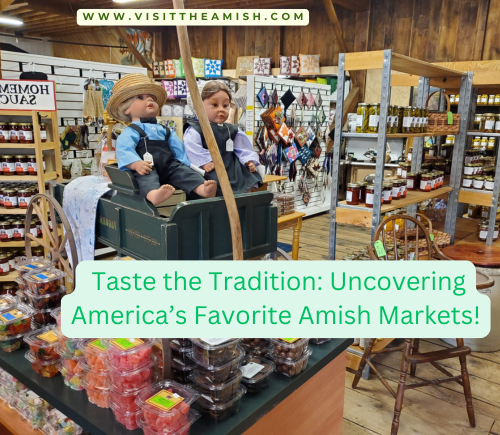
Taste the Tradition: Uncovering America’s Favorite Amish Markets!


aste-the-Tradition-Uncovering-Americas-Favorite-Amish-Markets.

Embark on a journey through 10 more delightful Amish markets across America, each offering a unique glimpse into the rich traditions and craftsmanship of Amish communities:

Green Dragon Farmers Market & Auction, Pennsylvania

Located in Ephrata, Pennsylvania, the Green Dragon Farmers Market & Auction is a bustling hub of activity every Friday. With over 400 vendors, this market offers an incredible variety of fresh produce, handcrafted goods, and delicious baked treats. As you stroll through the aisles, you’ll find everything from crisp vegetables to intricate quilts[3].

Bird-In-Hand Bake Shop, Pennsylvania

Nestled in the heart of Bird-in-Hand, Pennsylvania, this charming bake shop is a must-visit for anyone with a sweet tooth. Famous for their shoofly pies, you’ll also find an array of whoopie pies, cinnamon buns, and freshly baked bread. The outdoor play area and petting zoo make it a perfect stop for families[3].

Yoder’s Bargain Store, Ohio

In Fredericksburg, Ohio, Yoder’s Bargain Store offers an authentic Amish shopping experience. This unassuming shop is where many Amish locals purchase household essentials. You’ll find a wide array of products, from handcrafted cookware to locally made quilts, all reflecting the Amish way of life[6].

Bluegate Farm Homegrown Produce & Homestyle Bakery, Pennsylvania

Located at 2725 A Lincoln Highway East, Ronks, Pennsylvania, this Amish-owned and operated farm is a treasure trove of homemade goods. Open from April through December, you can find unique items like homemade root beer and horseradish, alongside a variety of preserves and baked goods[1].

PA Dutch Farmers Market of Wyomissing, Pennsylvania

Situated at 845 Woodland Road, Wyomissing, Pennsylvania, this market is open Thursday through Saturday year-round. Here, you’ll discover a wide range of Amish delicacies, from fresh meats and cheeses to soft pretzels and locally sourced honey[1].

Kauffman’s Fruit Farm and Market, Pennsylvania

At 3097 Old Philadelphia Pike, Bird-in-Hand, Pennsylvania, Kauffman’s Fruit Farm and Market has been family-owned for five generations. Open Monday through Saturday year-round, you can enjoy fresh fruit from their orchard, homemade preserves, and their famous apple cider donuts[1].

Root’s Country Market and Auction, Pennsylvania

Every Tuesday, 705 Graystone Road in Manheim, Pennsylvania, comes alive with Root’s Country Market and Auction. With over 200 stands, you’ll find an impressive selection of meats, cheeses, fresh produce, and Amish furniture. Don’t miss the poultry and produce auctions for a truly unique experience[1].

Amish Country Coop Farmers Market, Minnesota

Located at 43368 County Road 23 South, Bertha, Minnesota, this market showcases goods from over 40 Amish families in Todd County. Open year-round, Monday through Saturday, you’ll find an array of handmade crafts, furniture, and fresh produce[1].

Nolensville Feed Mill Farmers Market, Tennessee

At 7280 Nolensville Road, Nolensville, Tennessee, this market offers a variety of Amish and Mennonite products. Open seven days a week (with early closings from January through May), you can find freshly baked goods, seasonal produce, and beautiful flowers[1].

Amish Market, Texas

In the heart of Fredericksburg, Texas, at 410 West Main Street, you’ll discover this family-owned business specializing in quality, handmade Amish furniture. Open Sunday through Friday year-round, it’s also a great place to sample homemade jams, jellies, and other authentic Amish and Mennonite food products[1].

As you explore these markets, you’ll not only find unique products but also experience the warmth and simplicity of Amish culture. Remember to respect local customs and enjoy the opportunity to step back in time while savoring the flavors and craftsmanship of America’s Amish communities.

Citations:
[1] https://www.wideopencountry.com/best-amish-markets/
[2] https://theblackandwhite.net/72838/feature/we-work-outside-love-nature-and-work-for-god-an-inside-look-at-the-germantown-dutch-market/
[3] https://www.travelawaits.com/2478141/best-amish-markets-in-lancaster-pennsylvania/
[4] https://amishamerica.com/five-lesser-known-sizeable-amish-communities/
[5] https://www.youtube.com/watch?v=CofzKWyKwW8
[6] https://www.journee-mondiale.com/en/11-hidden-wonders-of-amish-country-that-redefine-rural-america/

Step Back in Time: Explore the Charming Amish General Store in Northumberland, PA!


Nestled in the heart of Northumberland, Pennsylvania, the Amish General Store offers visitors a unique glimpse into the simplicity and quality of Amish craftsmanship and cuisine. This charming establishment has become a beloved destination for locals and tourists alike, seeking authentic Amish-made products and a taste of traditional rural life.

A Treasure Trove of Amish Goods

As you step into the store, you’re immediately enveloped by the rich aroma of freshly baked goods and the warm, welcoming atmosphere. The shelves are lined with an impressive array of handcrafted items and locally sourced foods:

A Treasure Trove of Amish Goods
  • Homemade Jams and Preserves: Savor the flavors of seasonal fruits carefully preserved in jars, perfect for spreading on your morning toast.
  • Bulk Foods: Stock up on pantry staples like flour, sugar, and dried beans, all available in generous quantities.
  • Handcrafted Furniture: Admire the sturdy, beautifully crafted wooden furniture pieces that showcase the renowned Amish woodworking skills.
  • Quilts and Textiles: Browse through a colorful selection of handmade quilts, placemats, and runners, each piece a testament to Amish needlework expertise.

Culinary Delights

The store’s bakery section is a highlight for many visitors:

  • Fresh-Baked Breads: From hearty whole wheat to soft white loaves, the breads here are baked daily using traditional recipes.
  • Pies and Pastries: Indulge in a slice of shoofly pie or take home a whole apple pie for a family treat.
  • Homemade Candies: Sample locally made fudge and hard candies, perfect for satisfying your sweet tooth.

A Shopping Experience Like No Other

What sets the Amish General Store apart is not just its products, but the shopping experience itself. The store operates without electricity, relying on natural light and simple cash registers. This commitment to tradition extends to the friendly, personalized service offered by the Amish staff, who are always happy to share their knowledge about the products and their way of life.

Whether you’re a curious tourist or a local looking for quality goods, the Amish General Store in Northumberland offers a shopping experience that’s both enriching and enjoyable. It’s more than just a store; it’s a window into a simpler way of life, where quality craftsmanship and traditional values are still cherished.

A Treasure Trove of Amish Goods

Citations:
[1] https://thepointbarn.com
[2] https://www.reddit.com/r/preppers/comments/zasul5/amish_stores_near_you_amish_bulk_food_and_grocery/
[3] https://theamishmarket.net
[4] https://goodsstores.com/collections/amish-mennonite-goods
[5] https://www.discoverlancaster.com/blog/shopping-in-amish-country-pa/

https://www.visittheamish.com

Amish Community’s Great Migration: From Lancaster to Nebraska’s Heartland


Amish Community’s Great Migration: From Lancaster to Nebraska’s Heartland

In an unprecedented move that has sent ripples through both Amish and English communities alike, a significant portion of Lancaster County’s Old Order Amish population has announced plans to relocate to rural Nebraska. This decision, rooted in a complex web of cultural preservation, economic opportunity, and regulatory challenges, marks a historic shift for one of America’s oldest and largest Amish settlements.

The Stoltzfus family, longtime residents of Lancaster County, are among those preparing for the arduous journey westward. Eli Stoltzfus, 45, a respected elder in the community, explained the motivation behind this drastic decision. “We seek only to live as our forefathers did, in harmony with the land and our beliefs,” Stoltzfus said, his weathered hands clasped tightly as he spoke. “But each year, it becomes more challenging to maintain our way of life here in Lancaster.”

At the heart of the conflict lies a series of local government ordinances that the Amish community feels infringe upon their traditional practices. One such regulation, passed last year, requires all horse-drawn buggies to be equipped with electric lights and reflective tape, a move aimed at improving road safety but viewed by many Amish as an unacceptable encroachment of modern technology into their lives.

Sarah Lapp, 38, a mother of six and skilled quilter, expressed her concerns about the changing landscape of Lancaster County. “Our children are growing up in a world that’s becoming harder to shield from outside influences,” Lapp said, her eyes misting as she gazed across her family’s farmland. “In Nebraska, we hope to find the space and freedom to live according to our beliefs without constant pressure to change.”

The decision to relocate to Nebraska was not made lightly. A committee of elders, including Stoltzfus, spent months researching potential locations that could accommodate their community’s needs. They eventually settled on a stretch of land in Howard County, Nebraska, approximately 150 miles west of Omaha.

Howard County, with its vast open spaces and fertile soil, presents an attractive option for the Amish families seeking to establish new roots. The county’s population of just over 6,000 residents is spread across nearly 570 square miles, offering the kind of rural isolation that many in the Amish community crave. The small town of St. Paul, the county seat, has expressed cautious optimism about the potential influx of new residents.

Mayor John Bergman of St. Paul commented on the proposed migration, stating, “While we certainly have questions about how this will impact our community, we’re open to welcoming new neighbors who share our values of hard work and family.” Bergman emphasized that the town council is working to ensure a smooth transition, should the Amish families decide to make Howard County their new home.

The economic implications of this move are significant for both Lancaster County and Howard County. In Lancaster, the Amish community has long been a cornerstone of the local economy, contributing through agriculture, craftsmanship, and tourism. The exodus of several hundred families could have a noticeable impact on local businesses and the county’s famous farmer’s markets.

Conversely, Howard County sees potential economic benefits from the arrival of the Amish. County Commissioner Lisa Hoffman noted, “The Amish are known for their agricultural expertise and craftsmanship. Their presence could revitalize some of our struggling rural areas and bring new skills to our community.”

However, the path to relocation is not without its challenges. The logistics of moving hundreds of families, along with their livestock and equipment, over a distance of more than 1,200 miles presents a daunting task. The community plans to make the journey in stages, with advance teams preparing land and temporary housing in Nebraska before the main groups arrive.

Adding to the complexity are the legal and regulatory hurdles that must be navigated. While Nebraska generally has fewer restrictions on Amish practices than Pennsylvania, the community will still need to work with local authorities to ensure compliance with state laws while preserving their traditional way of life.

amish

One area of potential conflict is education. The Amish typically educate their children in one-room schoolhouses only through the eighth grade, a practice that has been accepted in Lancaster County for generations. Nebraska law, however, requires schooling through age 18 or until high school graduation. Negotiations are underway to find a compromise that respects both Amish traditions and state educational requirements.

Despite these challenges, many in the Amish community see the move as an opportunity for renewal. Jacob Yoder, 52, a skilled carpenter and father of eight, spoke of the possibilities that await in Nebraska. “We do not embrace change lightly,” Yoder said, his eyes bright with anticipation. “But sometimes, to preserve what is most important, we must be willing to leave the familiar behind. In Nebraska, we see a chance to build a community that can thrive for generations to come.”

The impact of this migration extends beyond the Amish community itself. In Lancaster County, local businesses that have long catered to Amish needs are bracing for a potential downturn. Mary Hershey, owner of a fabric store in Intercourse, PA, expressed her concerns: “The Amish are not just our customers; they’re our neighbors and friends. Their leaving will leave a void that’s hard to fill.”

Tourism, a significant industry in Lancaster County, may also feel the effects of the Amish exodus. The county’s Amish population has long been a draw for visitors seeking to experience a glimpse of a simpler way of life. Local tourism officials are already strategizing on how to adapt their marketing to reflect the changing demographics of the area.

amish

In Nebraska, preparations are underway to welcome the new arrivals. Local farmers have reached out to offer assistance and advice on adapting to the region’s climate and soil conditions, which differ significantly from those in Pennsylvania. Howard County’s agricultural extension office is developing resources to help the Amish families transition their farming practices to suit the local environment.

The move has also sparked interest from other Amish communities across the United States. Representatives from settlements in Ohio, Indiana, and Wisconsin have visited both Lancaster County and Howard County to observe the process, potentially considering similar relocations in the future.

As news of the impending migration spreads, it has reignited national discussions about religious freedom, cultural preservation, and the changing face of rural America. Sociologists and historians are watching closely, recognizing the potential historical significance of this modern-day exodus.

Dr. Emily Thornton, a professor of American Studies at Franklin and Marshall College in Lancaster, offered her perspective: “What we’re witnessing is a continuation of the Amish story in America – a story of seeking a place to practice their faith freely. It’s a reminder that even in our rapidly changing world, there are communities dedicated to maintaining their traditional ways of life.”

The first group of families is scheduled to depart for Nebraska in the spring, timing their arrival to coincide with the planting season. As they prepare for this monumental change, the Amish community remains focused on their core values of faith, family, and simplicity.

amish

Eli Stoltzfus, looking out over the Lancaster County farmland that has been home to his family for generations, summed up the community’s resolve: “We go forth with heavy hearts but strong spirits. Our roots may be in this soil, but our foundation is in our faith and our way of life. That we carry with us, wherever we may go.”

As the sun sets over the rolling hills of Lancaster County, casting long shadows across the patchwork of farms and fields, there’s a sense of both ending and beginning. The Amish community’s journey to Nebraska represents more than just a physical relocation; it’s a testament to their unwavering commitment to preserving a way of life in an ever-changing world.

The coming months will undoubtedly bring challenges and adjustments for both the departing Amish families and the communities they leave behind and join anew. Yet, as they have done for centuries, the Amish face this new chapter with quiet determination, their faith and traditions serving as a compass guiding them towards an uncertain but hopeful future in the heartland of America.

Citations:
[1] https://www.amishvillage.com/about-amish-village/lancaster-amish/
[2] https://datausa.io/profile/geo/lancaster-county-pa
[3] https://goamish.co/blogs/news/the-history-of-the-amish-community-in-lancaster-county-pennsylvania
[4] https://www.discoverlancaster.com/amish/
[5] https://datausa.io/profile/geo/lancaster-pa/
[6] https://www.discoverlancaster.com/amish/history-beliefs/
[7] https://lancasterindicators.com/demographics/population-by-race-ethnicity
[8] https://lancasterpa.com/things-to-do/amish-attractions/
[9] https://en.wikipedia.org/wiki/Lancaster,_Pennsylvania

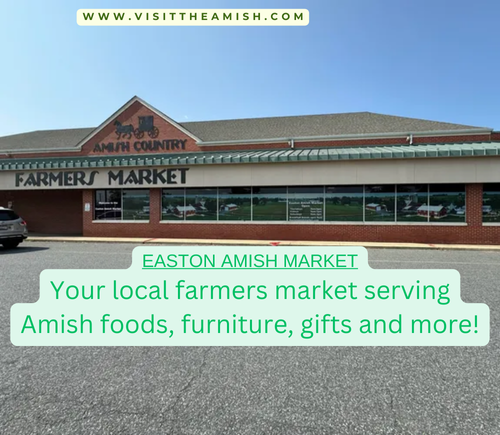
Discover a Slice of Amish Life at Easton’s Hidden Gem


Taste the Tradition Uncovering America’s Favorite Amish Markets!

Discover a Slice of Amish Life at Easton’s Hidden Gem

Nestled in the heart of Easton, Maryland, the Easton Amish Market offers visitors a unique glimpse into the rich traditions and flavors of Amish culture. Located at 101 Marlboro Avenue, this charming market is a must-visit destination for tourists seeking an authentic and delicious experience.

A Cornucopia of Delights

As you step into the market, you’ll be greeted by a bustling atmosphere filled with over 20 vendor stands. The air is rich with the aroma of freshly baked goods and savory meats, enticing you to explore further.

Easton Amish Market

Culinary Treasures

Fresh Meats and Cheeses: The market’s butcher shop is renowned for its high-quality, preservative-free meats. Don’t miss the chance to try their maple-smoked bacon or succulent rib-eye steaks[1][2].

Baked Goods: Fisher’s Pastries is a haven for those with a sweet tooth. Indulge in their mouthwatering selection of:

  • Lemon bars
  • Strawberry tarts
  • Chocolate chip pretzel cookies[2][4]

Pretzels and More: Treat yourself to freshly made soft pretzels, available in various flavors including crab, steak, and lobster stuffed options[1].

easton amish

Unique Finds

  • Handcrafted Furniture: Browse the selection of beautifully crafted, solid wood Amish furniture at Dutch Home[1][2].
  • Local Produce: Enjoy a wide variety of fresh fruits and vegetables, with an emphasis on seasonal, locally grown produce[1][4].
  • Artisanal Crafts: Discover handmade beaded jewelry, wooden pens, and other unique gifts crafted by local artisans[1].

A Feast for All

The market features multiple dining options, perfect for a hearty meal or quick snack:

  • Breakfast Buffet: Start your day with a delicious spread of Amish breakfast favorites[5].
  • BBQ Delights: Savor mouthwatering BBQ chicken and ribs[1][4].
  • All-You-Can-Eat Platters: On Friday evenings, don’t miss the ‘Friday Night Social’ from 5-7 pm, where participating vendors offer special all-you-can-eat platters[4].

Plan Your Visit

amish market Easton
  • Hours:
  • Thursday: 9am – 6pm
  • Friday: 9am – 7pm
  • Saturday: 9am – 3pm (Breakfast stand opens at 8am)[1]
  • Tip: Bring cash for potential discounts, though credit cards are accepted[5].

The Easton Amish Market isn’t just a shopping destination; it’s a vibrant community hub where you can meet locals, make new friends, and immerse yourself in the warmth of Amish hospitality. Whether you’re seeking fresh, quality ingredients, unique handcrafted items, or simply a taste of traditional Amish cuisine, this market promises an unforgettable experience for all who visit.

Citations:
[1] https://eastonamishmarket.com
[2] https://en.tripadvisor.com.hk/ShowUserReviews-g41121-d801524-r452781100-The_Amish_Market-Easton_Talbot_County_Maryland.html
[3] https://eastonfarmersmarket.com/our-vendors/
[4] https://discovereaston.com/dining/amish-country-farmers-market/
[5] https://www.yelp.com/biz/amish-market-easton

Taste Tradition: Your Ultimate Guide to the Best Amish Markets in 10 States!


amish market

Embark on a delightful journey through some of America’s most cherished Amish markets across 10 states. These markets offer a unique blend of traditional craftsmanship, delicious homemade goods, and a glimpse into the simple yet rich Amish way of life. Here’s your guide to experiencing the best Amish markets in each state:

Ohio: Sheiyah Market

In the heart of Ohio’s Amish Country, you’ll find Sheiyah Market, a sprawling campus housing four unique stores. Located at 4755 State Route 39, Berlin, OH 44610, this market is a treasure trove of Amish craftsmanship[5]. As you stroll through the Village Gift Barn, Country Gatherings, and the Gardens at Country Gatherings, you’ll discover an array of handcrafted furniture, quilts, and home decor. Don’t forget to stop by the Buggy Brew Coffee Co. for a refreshing drink!

Pennsylvania: Lancaster Central Market

Your visit to Pennsylvania wouldn’t be complete without exploring the historic Lancaster Central Market at 23 N Market St, Lancaster, PA. Open on Tuesdays, Fridays, and Saturdays year-round, this market boasts over 60 vendors offering a wide variety of Amish-made goods[4]. From fresh produce and meats to handcrafted items and baked goods, you’ll find yourself immersed in the rich flavors and traditions of Amish culture.

Indiana: Shipshewana Flea Market

While not exclusively an Amish market, the Shipshewana Flea Market in Indiana is a must-visit destination for Amish goods. Open seasonally from May to September, this massive outdoor market features hundreds of vendors, many of whom are Amish, selling everything from handmade furniture to fresh produce and baked goods.

Michigan: Helfling’s Amish Farm Market

Head to 38953 Harper Avenue, Clinton Township, Michigan, where you’ll discover Helfling’s Amish Farm Market[4]. Open Monday through Saturday year-round, this family-owned business specializes in minimally processed, naturally raised fresh meats. You’ll also find a selection of other grocery items, including fresh produce and Amish-made goods.

Delaware: Dutch Country Farmers Market

At 701 N Broad Street, Middletown, Delaware, you’ll find the Dutch Country Farmers Market[4]. Open Thursday through Saturday year-round, this market features 20 vendors selling a variety of Amish delicacies. Treat yourself to freshly baked pies, donuts, cheeses, and meats. Don’t miss the opportunity to browse their selection of Amish furniture!

Arkansas: Amish and Country Store

http://amishandcountrystore.com

Venture to 3040 Highway 65 North, Dermott, Arkansas, where the Amish and Country Store awaits[4]. Open Monday through Saturday year-round, this grocery store offers a variety of Amish and Mennonite goods. You’ll find everything from handmade soaps and bulk foods to fresh bread, jams, candy, cheeses, and meats.

Minnesota: Amish Country Coop Farmers Market

Experience the charm of Minnesota’s Amish community at 43368 County Road 23 South, Bertha, Minnesota[4]. Open year-round, Monday through Saturday, this market features goods from over 40 Amish families in Todd County. You’ll find an impressive array of handmade crafts, furniture, fresh produce, and other Amish specialties.

North Carolina: Yoder’s Country Market

Make your way to 90 County Home Road, Blanch, North Carolina, where Yoder’s Country Market offers a delightful Amish shopping experience[4]. Open year-round, Monday through Saturday (with shorter hours during winter), this market features an on-site deli and bakery. You’ll also find a wide selection of jarred foods, candy, baking supplies, and other grocery items.

Tennessee: Nolensville Feed Mill Farmers Market

At 7280 Nolensville Road, Nolensville, Tennessee, you’ll discover the Nolensville Feed Mill Farmers Market[4]. Open seven days a week (with early closings from January 1 through May 1), this market carries a variety of Amish and Mennonite products. Look for freshly baked goods, fruits and vegetables, and seasonal flowers and gourds.

Texas: Amish Market

Your Amish market tour concludes at 410 West Main Street, Fredericksburg, Texas[4][6]. Open Sunday through Friday year-round, this family-owned business specializes in quality, handmade Amish furniture. You’ll also find a variety of unique gifts and authentic Amish and Mennonite food products. Don’t miss the opportunity to sample homemade jams, jellies, and pickled items!

As you explore these markets, you’ll not only find unique products but also experience the warmth and simplicity of Amish culture. Remember to respect local customs and enjoy the opportunity to step back in time while savoring the flavors and craftsmanship of America’s Amish communities.

Citations:
[1] https://theamishmarket.net
[2] https://theamishmarket.net/contact
[3] https://www.travelawaits.com/2478141/best-amish-markets-in-lancaster-pennsylvania/
[4] https://www.wideopencountry.com/best-amish-markets/
[5] https://www.visitamishcountry.com/shopping/furniture/sheiyah-market
[6] https://www.onlyinyourstate.com/experiences/texas/homemade-amish-goods-tx
[7] https://www.buysalvagefood.com/save-money/amish-bulk-food-stores.html
[8] https://www.yelp.com/biz/amish-heritage-country-market-marysville
[9] https://amishdoor.com/amish-door-market/