
The Theology of the Table: Inside an Authentic Amish Dinner
In an era obsessed with foams, deconstructions, and fifteen-ingredient vinaigrettes, the authentic Amish dinner stands as a quiet, sturdy rebellion. It is a culinary tradition that refuses to be rushed, rooted not in trends, but in the practical necessities of farm life and the deep spiritual belief in community.
To sit down at an Amish table is to understand that food is fuel for hard, physical labor, but it is also the glue that binds a family. An authentic Amish dinner isn’t about showing off culinary skills; it’s about providence, gratitude, and sustenance.
The Philosophy of “Plain” Cooking
Amish cooking is often categorized under the broader umbrella of “Pennsylvania Dutch” cuisine. It is characterized by its reliance on what the farm provides: dairy, meat, garden vegetables, and grains.
The food is unapologetically “gutsy.” It is designed to stick to the ribs of farmers who have been up since 4:00 AM milking cows or plowing fields with Belgian draft horses. You won’t find delicate salads as a main course here. You will find starches piled upon proteins, usually covered in gravy.
There is a distinct lack of aggressive seasoning. You won’t find chili peppers or fistfuls of garlic. Instead, the flavor profile leans toward the savory-sweet, relying heavily on salt, pepper, sugar, vinegar, and, most importantly, butter.
The Anatomy of the Meal
A typical Amish evening meal is substantial. It usually centers around a hearty meat dish—roast beef, ham, or chicken (often broasted or stewed).
Alongside the meat, there must be a starch, and often two. Potatoes are omnipresent, usually mashed with copious amounts of butter and cream. But the true star of the Amish table is the noodle. Amish egg noodles are thick, irregular, and yellow, with a chew that supermarket pasta can never replicate.
The meal is balanced by the famous Pennsylvania Dutch tradition of “seven sweets and seven sours.” While not literally seven of each at every meal, there is always a counterbalance to the rich, savory main dishes. This might include pickled beets, chow-chow (a tangy vegetable relish), sweet gherkins, apple butter, or creamy coleslaw with a vinegar-sugar dressing.
And finally, no Amish dinner is complete without dessert. Pie is mandatory—shoofly, vanilla crumb, or seasonal fruit—often served in a bowl with a splash of fresh milk.
The Centerpiece: Sunday Roast and Browned Butter Noodles
The recipe below is a classic representation of an Amish Sunday dinner. It features a slow-cooked roast that requires minimal tending, served over those essential hearty egg noodles.
The secret weapon here is browned butter. The Amish use browned butter the way French chefs use truffle oil. By gently cooking butter until the milk solids toast to a hazelnut color, it transforms simple noodles into something deeply savory, nutty, and incredibly comforting.

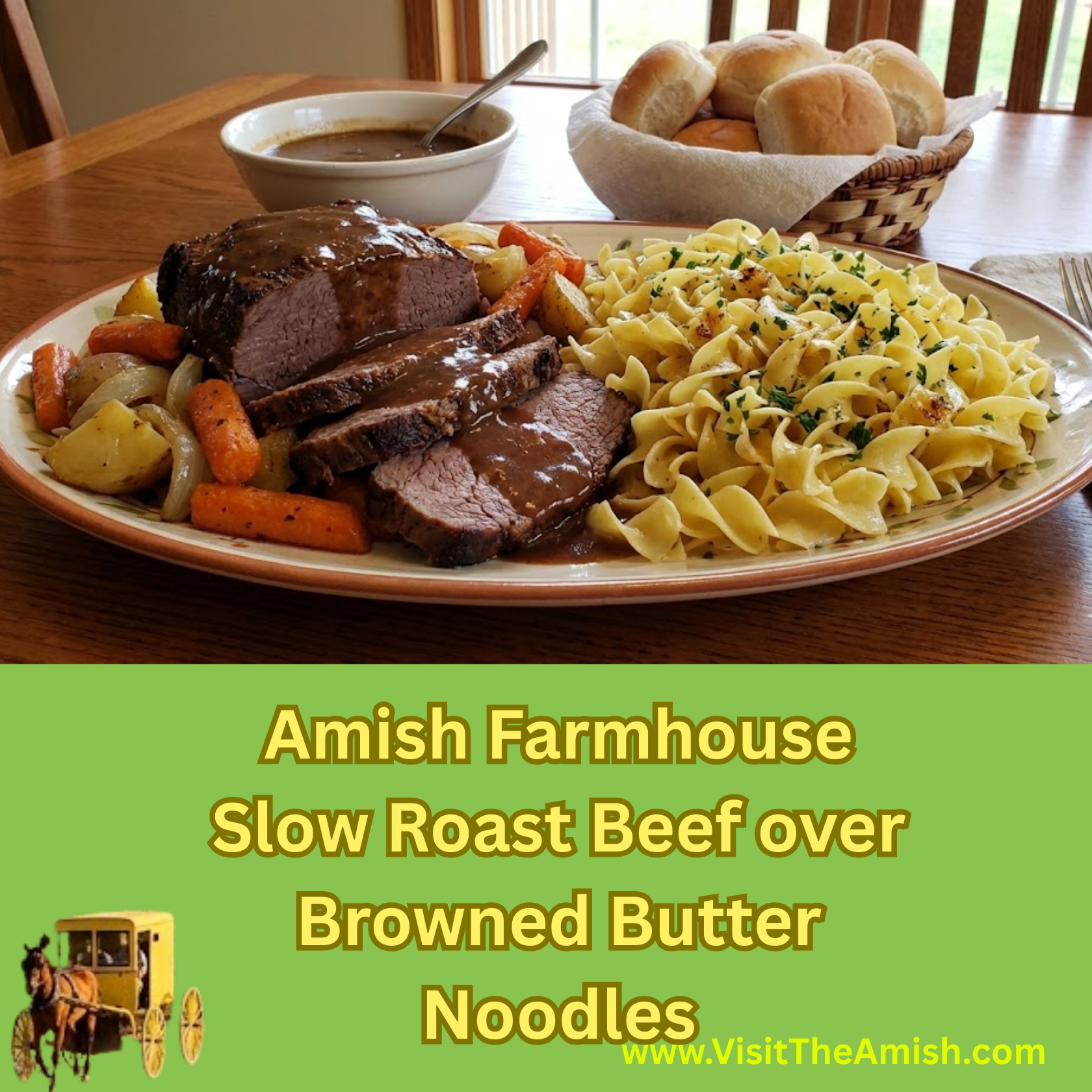
Recipe: Amish Farmhouse Slow Roast Beef over Browned Butter Noodles
This recipe is designed to feed a family of 6-8 heartily. It is simple, unfussy, and relies on the quality of the beef and the magic of the butter.
Part 1: The Slow Roast Beef
Ingredients:
- 1 (3-4 pound) Chuck Roast (this cut has the best marbling for slow cooking)
- 2 Tbsp vegetable oil or lard
- 1 large yellow onion, roughly chopped
- 3 cups beef broth (or water with beef base)
- 1 bay leaf
- Salt and copious amounts of cracked black pepper
- Optional: 4 carrots and 4 potatoes, peeled and chunked, added in the last hour of cooking.
Instructions:
- Season aggressively: Pat the roast dry with paper towels. Generously cover every side of the meat with salt and cracked black pepper. Do not be shy with the pepper.
- The sear: In a large Dutch oven or heavy bottomed pot, heat the oil over medium-high heat until shimmering. Sear the roast on all sides until a deep, dark brown crust forms (about 4-5 minutes per side). Remove the roast and set aside.
- Deglaze: Toss the chopped onions into the pot and cook for 2 minutes until softening. Pour in the beef broth, using a wooden spoon to scrape up the browned bits (fond) stuck to the bottom of the pot.
- The slow cook: Return the roast to the pot. Add the bay leaf. The liquid should come about halfway up the side of the beef. Bring to a boil, then immediately reduce heat to low, cover tightly with a lid, and simmer gently.
- Alternative Method: Place the covered pot in a 275°F (135°C) oven.
- Wait: Cook for 3.5 to 4 hours. The meat is done when a fork inserts easily and twists with no resistance. It should be falling-apart tender.
- Gravy (Optional but recommended): Remove the beef to a platter and cover with foil to rest. Skim the excess fat off the cooking liquid. Bring the liquid to a boil. Whisk 2 tablespoons of cornstarch with 3 tablespoons of cold water to make a slurry, then whisk it into the boiling liquid until thickened.
Part 2: The Browned Butter Noodles
Note: While you can use store-bought wide egg noodles, this dish shines with the thickest, homeliest noodles you can find.
Ingredients:
- 1 lb wide egg noodles (dried or fresh)
- 1 stick (1/2 cup) salted butter (do not use margarine)
- 1/2 cup fresh breadcrumbs (optional, for topping)
- Salt to taste
Instructions:
- Cook the noodles: Bring a large pot of heavily salted water to a boil. Cook the egg noodles according to package directions until tender (Amish noodles are usually cooked softer than al dente). Drain well.
- Brown the butter: In a large, light-colored skillet or saucepan (light color helps you see the browning), melt the stick of butter over medium heat.
- Watch closely: The butter will melt, then foam noisily. Once the foam subsides, watch it carefully. Swirl the pan occasionally. The milk solids at the bottom will begin to turn golden brown, and the butter will smell intensely nutty and caramel-like. As soon as it reaches a deep golden brown, remove it from the heat immediately so it doesn’t burn.
- Combine: Pour the cooked, drained noodles back into their large pot. Pour the hot browned butter over the noodles and toss gently to coat every strand. Taste and add salt if needed.
- Optional Topping: Toast breadcrumbs in a separate small pan with a teaspoon of butter until crisp, and sprinkle over the noodles just before serving.
To Serve:
Shred the roast beef into large chunks. Serve a generous mound of browned butter noodles on a plate, top with the beef, and ladle the hot gravy over everything. Serve with a side of coleslaw or pickled beets to cut the richness.