
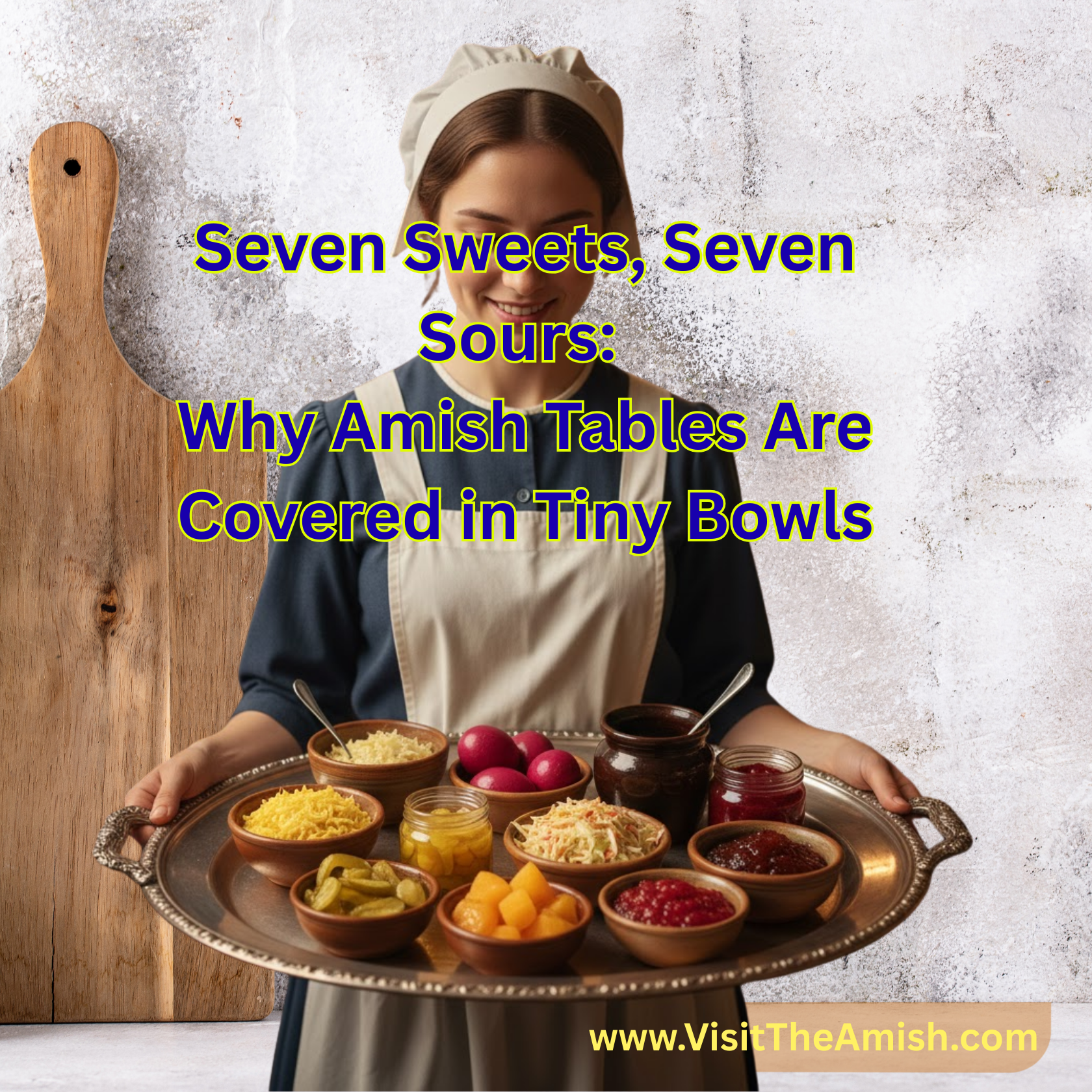
If you sit down at a traditional Pennsylvania Dutch table—whether in a farmhouse in Lancaster County or at a fire hall wedding reception in Berks County—you will notice something distinct about the geography of the meal. The center is dominated by the heavyweights: platters of roast chicken, baked ham, or pot roast. But the perimeter? The perimeter is a riot of color, packed with small bowls, crocks, and saucers that seem to multiply the longer you look at them.
This is the domain of the Seven Sweets and Seven Sours.
For generations, food historians and tourists alike have been fascinated by this culinary custom. It is a tradition that speaks to the heart of Amish and Mennonite culture: a deep connection to the land, a mastery of preservation, and an intuitive understanding of flavor balance that predates modern gastronomy by centuries.
A Myth or a Menu?
The legend goes that a proper Amish “company meal” requires exactly seven sweet side dishes and seven sour side dishes to be considered complete.
Historians often argue that the specific number “seven” is likely a 20th-century romanticization—a bit of folklore amplified to charm tourists. In reality, an Amish grandmother didn’t count the jars on her table to hit a lucky number. She simply put out what she had. However, the concept is entirely authentic. It represents abundance. In a culture where waste is sinful and hospitality is holy, covering the empty spaces of a tablecloth with the bounty of the cellar is a sign of welcome.
Whether there are fourteen dishes or just four, the philosophy remains the same: a meal is not finished until the palate has traveled between the extremes of sugar and vinegar.
The Sours: Cutting the Fat
To understand the “Sours,” you have to understand the “Mains.” Pennsylvania Dutch cuisine is fueled by hard labor.1 It is rich, starchy, and fatty—think pork sausage, lard-crust pies, buttered noodles, and gravy.
Long before chefs in Paris were talking about “acid cutting fat,” Amish cooks understood that a bite of rich, salty ham needed a sharp counterpoint to wake up the tongue. The Sours serve as the palate cleansers of the meal. They are almost always pickled vegetables, preserved in vinegar to last through the long winters.
Classic Sours include:
- Chow-Chow: The king of the sours. A mustard-yellow relish made from chopped vegetables (corn, beans, cauliflower, peppers) pickled in a turmeric-spiced brine.
- Red Beet Eggs: Hard-boiled eggs submerged in pickled beet juice until they turn a shocking magenta.2 They are tangy, earthy, and dense.
- Pepper Cabbage: A slaw that skips the mayonnaise entirely, relying on a sweet-and-tart vinegar dressing and black pepper.3
- Pickled Watermelon Rind: A thrifty use of leftovers, transforming the tough rind into a clove-spiced, crunchy pickle.
The Sweets: Preserving the Harvest
On the other side of the ledger are the Sweets. In the Pennsylvania Dutch tradition, “dessert” isn’t just for the end of the meal. Sweet components are eaten alongside the savory meat and potatoes. This dates back to medieval European eating habits, where fruit preserves were often paired with roasted meats.
These dishes were born of necessity. Before refrigeration, the only way to save the summer’s fruit harvest was to cook it down with sugar or spices.
Classic Sweets include:
- Apple Butter: Apples cooked slowly in copper kettles until they caramelize into a dark, spreadable paste.4
- Spiced Cantaloupe: Melon chunks preserved in a syrup of cinnamon and ginger.
- Cottage Cheese with Apple Butter: A very specific combination where the bland, cool curds are topped with the intense fruit spread.5
- Dried Corn: While savory, this dish is often reconstituted with cream and sugar, blurring the line between a vegetable and a pudding.6
The Modern Table
Today, the tradition of the Seven Sweets and Seven Sours is fading in private homes, reserved mostly for weddings, funerals, or the holidays. The sheer labor required to grow, harvest, chop, and can fourteen different varieties of produce is a luxury of time that few possess in the modern era.
However, the legacy of the tradition survives in the flavor profile of the region. If you order a sandwich in Reading or Lancaster, don’t be surprised to find a sweet pepper relish on your hot dog or a side of pickled beets with your chicken pot pie.
The Seven Sweets and Seven Sours is more than just a quirky dining habit. It is a story of survival. It tells the history of families who wasted nothing, who captured the sunshine of July in a glass jar to brighten the gray gloom of January. It is a reminder that a good life, like a good meal, requires a balance of the bitter and the sweet.
