
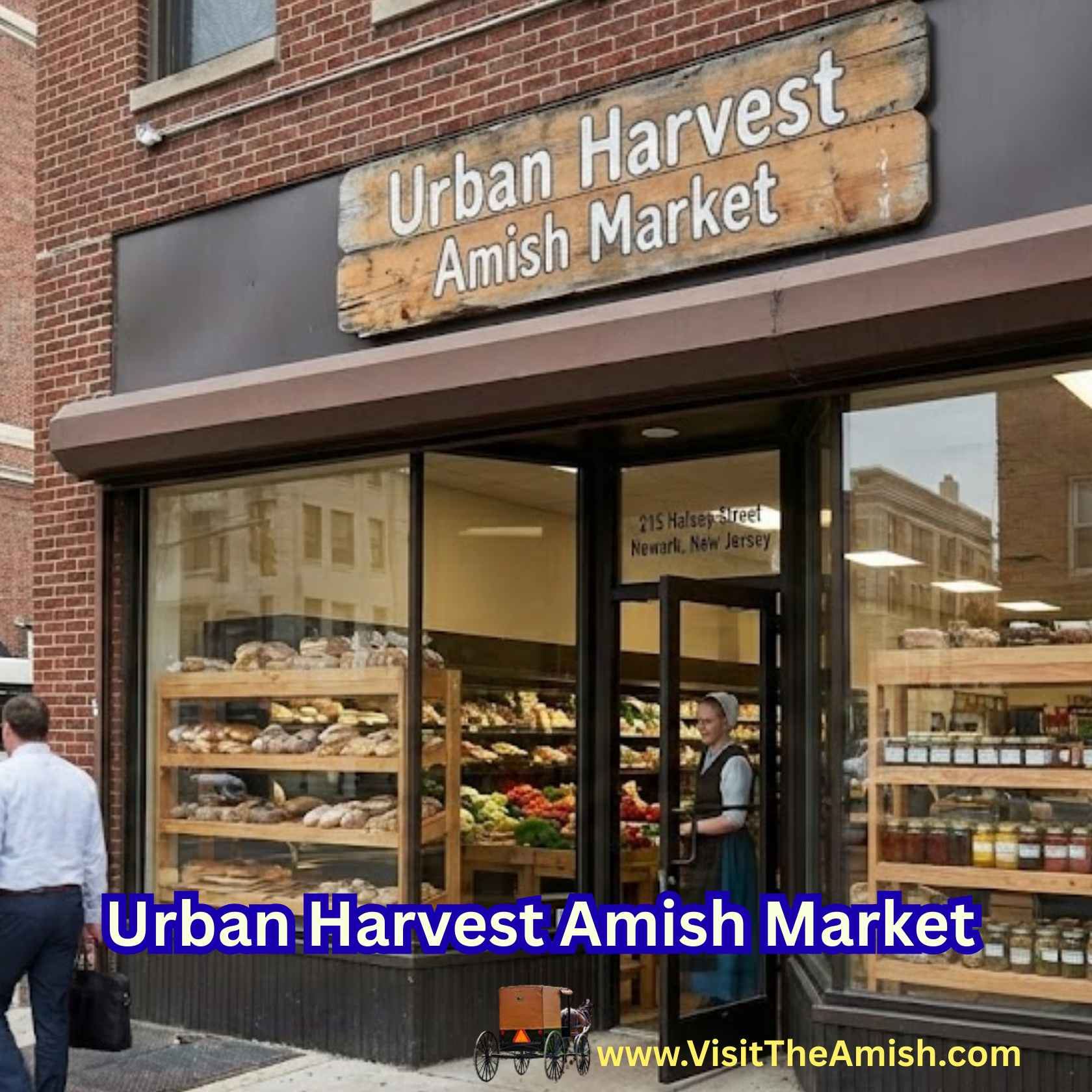
A Slice of Lancaster on Halsey: Urban Harvest Amish Market Brings Country Calm to Newark
The rhythm of Newark is unmistakable: the distant hum of NJ Transit trains, the honking of taxis on Broad Street, and the hurried footsteps of students and professionals rushing toward the Prudential Center or Rutgers University. It is a city of steel, glass, concrete, and unceasing motion. But recently, at 215 Halsey Street, the rhythm slows down. The frantic city soundtrack fades, replaced by the rhythmic kneading of dough and the quiet, polite murmur of Pennsylvania Dutch commerce.
This is the home of the newly opened Urban Harvest Amish Market, an establishment that feels less like a grocery store and more like a portal to another century. In a city famous for its Portuguese rodizios and classic Italian delis, the arrival of authentic Amish fare has created a culinary shockwave that is as unexpected as it is delicious.
The Unlikely Oasis
The storefront itself stands in stark contrast to the surrounding architecture. While neighboring businesses sport neon signs and digital displays, Urban Harvest is announced by a modest, hand-painted wooden sign in muted forest greens and creams. Inside, the transformation is total. The fluorescent glare typical of urban bodegas is gone, replaced by warm, pendant lighting that illuminates aisles of rough-hewn oak shelving.
“We wanted to bring the farm to the city, not just the food,” says Caleb Miller, the soft-spoken manager of the market, who commutes—albeit by van, not buggy—from Lancaster County three times a week to oversee operations. “Newark has so much energy. We thought maybe it could use a little bit of our quiet, too.”
The air inside the market is thick with aromas that seem alien to the downtown corridor: sweet hickory smoke, pickling spices, and the overwhelming, comforting scent of rising yeast. It is a sensory disruption that stops pedestrians dead in their tracks.
The Bakery: Sugar, Flour, and Tradition
If the smell draws you in, the bakery counter is what keeps you there. This isn’t the pre-packaged, preservative-laden pastry aisle of a chain supermarket. This is baking as a contact sport.
The Glazed Sourdough Donuts are the size of softballs, pillowy and coated in a glaze that cracks delicately with the first bite. They are fried fresh every morning, and by 10:00 AM, the trays are often empty. Then there are the Whoopie Pies—specifically the Peanut Butter cream version—which have already garnered a cult following among the office workers in the nearby Gateway Center.

“I used to grab a bagel and run,” says Marcus Thorne, a financial analyst who works two blocks away. “Now, I budget an extra twenty minutes just to stand in line here. The apple fritters? They’re heavy. They feel real. You eat one of those, and you’re good until dinner. It’s the best three dollars you can spend in this city.”
Beyond the sweets, the bread selection is formidable. Loaves of white, wheat, and rye stand like soldiers on the back wall. The Jalapeño Cheddar Bread has become a breakout star, offering a spicy kick that pairs surprisingly well with the market’s calmer, creamier cheeses.
The Deli and Butcher: Farm to City
Walking past the bakery, customers find themselves at the deli counter, a massive glass case that spans nearly the entire length of the store. Here, the “farm-to-table” concept isn’t a marketing buzzword; it’s a logistical reality.
The meats are sourced directly from Miller’s extended family farms in Pennsylvania. The Smoked Ham is cured with a secret blend of maple and brown sugar that dates back four generations. It is sliced thin, falling into ribbons that melt on the tongue. The Rotisserie Chickens, spinning slowly on spits behind the counter, are seasoned only with salt, pepper, and butter, yet they possess a depth of flavor that defies their simplicity.
“The roast beef is pink in the middle, exactly how it should be,” wrote local food blogger Jessica Nunez in a review posted earlier this week. “But the real sleeper hit is the Amish Roll Butter. It comes in these big, yellow logs wrapped in parchment paper. I bought one on a whim, and I swear, I will never buy supermarket sticks again. It tastes like cream and sunshine.”
For the lunch crowd, the market offers made-to-order sandwiches on their house-made pretzel rolls. The “Barnraiser”—a towering stack of turkey, Amish Swiss cheese, lettuce, tomato, and sweet hot mustard—has already become a Halsey Street staple.
The Pantry: Bulk Goods and Hidden Gems
The center aisles of Urban Harvest are dedicated to bulk foods, a shopping style that is making a comeback for both economic and environmental reasons. Rows of clear bins hold everything from soup mixes and granola to dried mango slices and chocolate-covered espresso beans.
The spice section alone is worth the trip. Packaged in simple plastic containers with plain white labels, the spices are vibrant and potent, a far cry from the dusty jars often found in grocery stores. A 4-ounce container of Smoked Paprika costs a fraction of what it would at a gourmet shop, yet the quality is superior.
“I come here for the pickled stuff,” says Maria Gonzalez, a resident of the Ironbound district. “The Chow-Chow, the pickled beets, the dilly beans. It reminds me of the canning my grandmother used to do. It’s sour and sweet and crunchy. I put the spicy pickled okra in my Bloody Marys now. It’s a game-changer.”
Also lining the shelves are jars of jams and jellies with flavors that intrigue the urban palate: Traffic Jam (a mix of berries), Frog Jam (figs, raspberries, orange, and ginger), and the classic Apple Butter, which is cooked down until it is nearly black and as thick as spreads.

A Community Connection
The success of Urban Harvest in such a short time speaks to a universal truth: people crave connection to their food. In a city where life moves at breakneck speed, there is something grounding about buying a dozen eggs that are brown, speckled, and occasionally still have a stray feather attached—proof of their origin.
The staff, dressed in traditional plain clothing, operate with a calm efficiency that stands out against the frenetic energy of their customers. There is no shouting, no rushing. They weigh the produce, slice the cheese, and count the change with a deliberate care that feels almost meditative.
“They treat every sandwich like it’s the only one they’re making today,” says David Ross, a student at Rutgers-Newark. “You wait a little longer, yeah. But you watch them slice the tomato and layer the meat, and you realize they actually care. That’s rare.”
The Verdict
Urban Harvest Amish Market is more than just a novelty; it is a vital new organ in the body of Newark. It provides access to fresh, unprocessed food in a downtown area that has long needed more grocery options. But more than that, it offers a pause button. It is a place where the rural and the urban collide, not with a crash, but with a handshake.
As the sun sets over the skyline, casting long shadows down Halsey Street, the lights of Urban Harvest glow warm and inviting. Inside, the last of the sourdough loaves are being sold, and the floors are being swept. In a city that never really sleeps, the Amish market is getting ready to rest, only to rise again before the dawn—bringing the quiet, delicious bounty of the country back to the heart of the city.
Urban Harvest Amish Market, 215 Halsey Street, Newark, NJ 07102
Hours: Wednesday – Saturday, 7:00 AM – 4:00 PM (Closed Sunday, Monday, Tuesday)
Must-Try Items: Glazed Sourdough Donuts, The “Barnraiser” Sandwich, Amish Roll Butter, Jalapeño Cheddar Bread.
