
Sects, Similarities, and Splits: The Many Branches of America’s Plain Communities
The Many Sects of Plain People: Amish, Mennonites, Brethren, and Beyond
As a historian of American religious life, I am endlessly fascinated by the so-called “Plain People”—those communities, chiefly of Anabaptist and Pietist heritage, who have chosen intentional simplicity as a core value and a public witness. Beneath the surface of horse-drawn buggies and plain dress lies a remarkable diversity: multiple denominations, historic schisms, intricate beliefs, and an enduring tension with modernity. This article explores, in detail, the primary sects that make up North America’s Plain tradition, focusing on the key Amish and Mennonite divisions, as well as the German Brethren (Dunkers), German Baptist, and several interrelated groups.
Anabaptist Roots: A Shared Heritage
The story of the Plain People begins in the turbulence of the 16th-century Reformation, with the emergence of Anabaptism in Switzerland and southern Germany. The Anabaptists insisted on adult (“believers”) baptism, a separation of church and state, and radical discipleship centered on the teachings of Jesus—especially nonviolence and simple living. Out of Anabaptism came three great traditions:
- Mennonites
- Amish
- Hutterites (the latter less “plain” today in the American sense)
Most Plain People in North America descend from Amish or Mennonite branches, with the addition of German Brethren and related Pietist sects.freedomforallamericans+3
Mennonites: From Radicals to a Global Denomination
Mennonites, tracing their lineage to Menno Simons (1496–1561), rapidly diversified as they spread across Europe and North America. The umbrella term “Mennonite” today encompasses a wide range of theological and lifestyle diversity—from technological openness to near-Amish traditionalism.
Major Mennonite Sects:
- Old Order Mennonites: Retain use of horse and buggy, plain clothing, Pennsylvania Dutch language, and often forgo electricity. Their communities resemble Old Order Amish but attend church in meetinghouses.
- Conservative Mennonites: Vary widely; may use cars (usually black), sometimes electricity, typically plain dress, and strict church discipline.
- Mainline/Progressive Mennonites: Use modern technology, drive cars, pursue higher education, and may be engaged in social justice, missions, and ecumenical work. Their worship is indistinguishable from many Protestant churches.
- Beachy Amish Mennonites: Originated from Amish, but adopted Mennonite practices over time, including greater openness to automobiles and outreach. Still wear plain dress and maintain conservative worship.sacredwanderings+1
Notable Distinctions:
- Mennonites are more institutionally connected (church conferences, higher education) than Amish.
- Services are usually in church buildings, not homes.
- Technology acceptance varies from total rejection to enthusiastic embrace, depending on subgroup.stoltzfusmeats+1
Amish: Separation, Tradition, and Enormous Diversity
Emerging from a schism with Swiss Mennonites under Jakob Ammann in 1693, the Amish are famous for their determination to remain separate from the “world,” but the term “Amish” itself covers a rich spectrum.

Major Amish Sects:
- Old Order Amish: The group most associated with plain dress, horse-drawn buggies, rejection of electricity, and German dialects. They worship in homes and emphasize strict separation, humility, and a life governed by the Ordnung (church rules).amishvillage+2
- New Order Amish: Emerging in the 20th century, they are slightly more open to technology (such as battery-powered lights, telephones in outbuildings), sometimes with more evangelical theology and a greater focus on personal salvation. Still usually horse-and-buggy.
- Swartzentruber Amish: The most conservative Old Order group: intense restriction on technology (even those allowed by other Amish), extra-plain dress, and rigorous Ordnung.
- Andy Weaver Amish: Ultra-conservative, mostly Ohio-based, slightly more open to outside economic engagement but plain and traditional.
- Beachy Amish Mennonites: See above—form a bridge between Amish and Mennonite worlds, allowing mission work, cars, sometimes Sunday School.
Notable Distinctions:
- Amish rarely evangelize, keep to rural settlements, and their church leadership is directly elected from within each district.discoverlancaster+3
German Brethren, German Baptist, and the “Dunkers”
Parallel to the Anabaptists, but equally “plain” in practice, are the German-language Pietist groups:
- Church of the Brethren (Dunkers / German Baptists): Founded in 1708 in Germany, the Brethren combined Anabaptist ideas (adult baptism, pacifism) with Pietism (personal piety, humility). Baptism by immersion earned them the “Dunker” nickname. In America, they divided into:
- Old German Baptist Brethren: Retain plain dress, horse-and-buggy transportation, and eschew modern technology.
- Church of the Brethren (Mainline): Have modernized but still stress simplicity and peace.
- German Baptist Brethren (Progressive/Conservative divides): Like Mennonite sects, these reflect a range from strict plainness to mainstream Protestant life.freedomforallamericans

Commonalities:
- Brethren worship is often simple and communal, with love feasts and a stress on humility.
- They are deeply committed to nonviolence.
Other Plain and Semi-Plain Groups
- Hutterites: Snowy colonies in the Dakotas and Canada, known for communal living rather than plain dress, yet still of Anabaptist heritage.
- Apostolic Christian Church, Old German Evangelical Baptist Brethren, Charity Christian Fellowship: Additional churches that maintain either plain customs or an Anabaptist identity to varying degrees.
Defining Features Across Sects
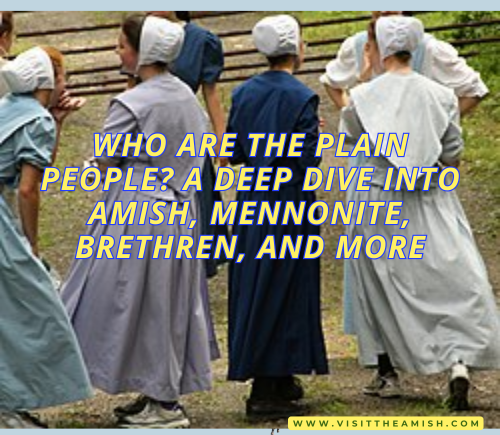
- Dress: Plain clothing, bonnets, beards, and dark colors are emblematic, but degree varies—from Amish uniformity to Mennonite variety.ohiosamishcountry+1
- Language: Most Old Orders use Pennsylvania Dutch or German for worship, whereas progressives use English.
- Technology: Spectrum runs from Old Order Amish (no grid electricity, buggies only) to mainstream Mennonites with full technology adoption.
- Church Services: Home-based (Amish), meetinghouse (Mennonite), or church (Brethren).
- Community: High value on mutual aid, forgiveness, and humility. Most practice foot-washing and adult baptism; non-participation in military (pacifism) is nearly universal.amishgazebos+2
- Discipline: “Shunning” used to enforce norms in Amish groups; less common but present in Old Order Mennonites and Brethren.
The world of America’s Plain People is strikingly diverse—rooted in shared Anabaptist ideals, but branching into many vibrant traditions across centuries. Each group represents a unique answer to timeless questions: How should we follow Christ? How should we live as a people set apart? It’s a living social mosaic that continues to fascinate historians, travelers, and all who seek to understand the enduring power of faith and community.
Check sources
- https://freedomforallamericans.org/differences-between-mennonite-and-amish/
- https://www.amishvillage.com/blog/the-amish-and-mennonites-what-are-the-differences/
- https://sacredwanderings.com/difference-between-amish-and-mennonite/
- https://www.stoltzfusmeats.com/blogs/stoltzfus-meats-blog/what-is-the-difference-between-amish-and-mennonites
- https://www.discoverlancaster.com/blog/difference-between-amish-and-mennonite/
- https://www.amishcountrylodging.com/blog/whats-the-difference-between-amish-and-mennonite-a-complete-history
- https://www.ohiosamishcountry.com/articles/whats-the-difference-between-amish-and-mennonites
- https://www.amishgazebos.com/amish-or-mennonite/