
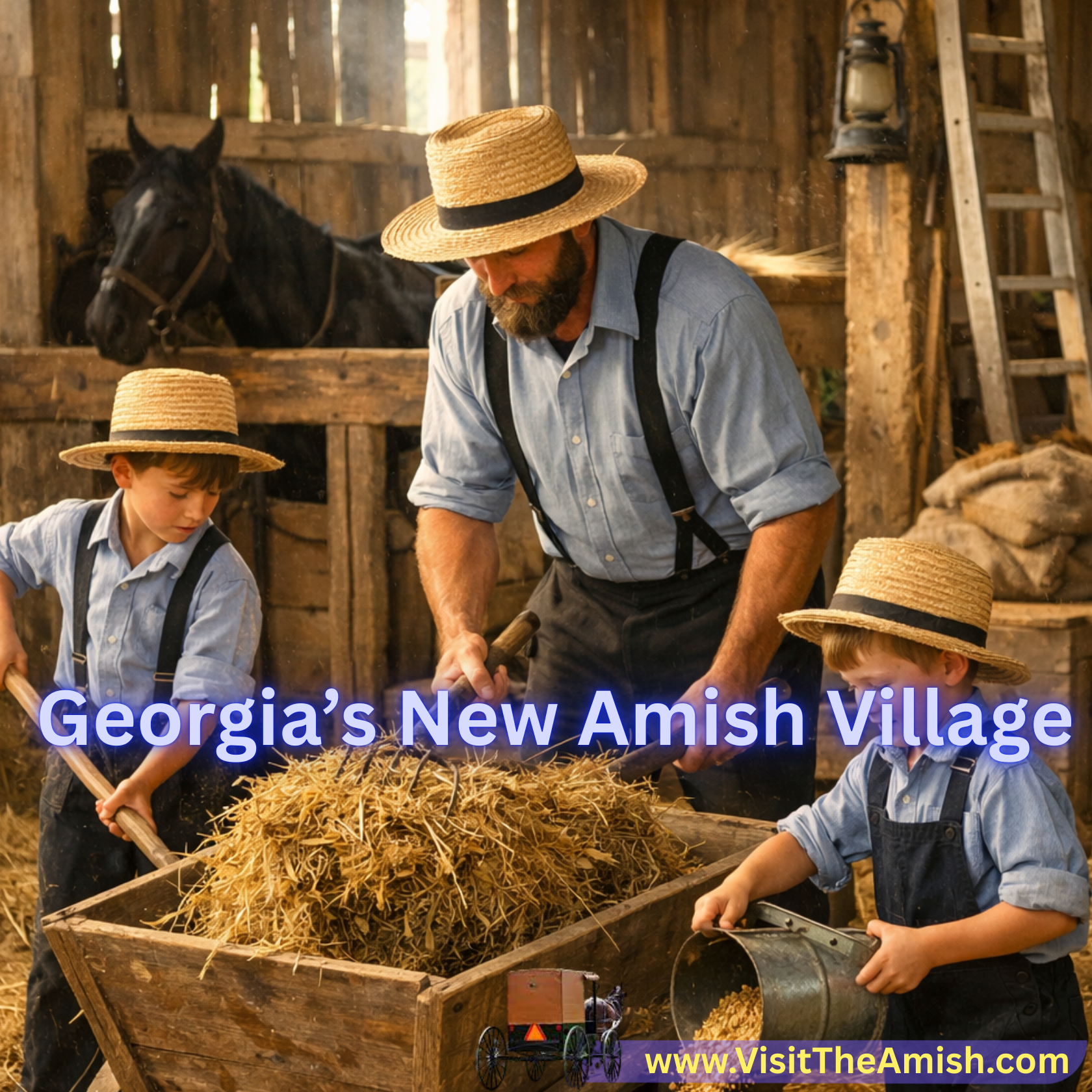
A new Amish village in the pines
Tucked among longleaf pines and red clay backroads, the community of Cedar Creek Amish Settlement sits just outside Hazelhurst, GA. The setting feels worlds away from the buzz of Atlanta or Savannah, yet close enough to major routes that curious travelers can wander in for the day. Imagine the first glimpse as you crest a small hill: white farmhouses, laundry flapping on clotheslines, and a pair of gray buggies rolling down a quiet lane toward a tiny crossroads lined with wooden storefronts.
This is exactly the sort of place that sparks the imagination: a pocket of old-world simplicity planted unexpectedly in the deep South. The air carries the scent of wood smoke and fresh-cut lumber, and the only sounds are the clip-clop of horses, the distant whir of a sawmill, and the low murmur of neighbors greeting one another in Pennsylvania Dutch.
Main street and Amish businesses
At the heart of Cedar Creek is a simple T-shaped “main street” where several Amish-run businesses cluster around a gravel parking area. Hand-painted signs, not neon, guide visitors from one doorway to the next, creating a sense of discovery rather than spectacle.
- Cedar Creek Bakehaus – The settlement’s unofficial welcome center, this bakery overflows with loaves of sourdough, warm cinnamon rolls, pecan sticky buns, and fruit pies made with Georgia peaches and local berries. Visitors line up early for fried pies and whoopie pies that practically melt in the humid morning air.
- Pine Ridge Woodworks – A low, white workshop with a broad porch stacked with rocking chairs, porch swings, and cedar chests. Inside, the air smells of sawdust and linseed oil as bearded craftsmen plane boards by hand and assemble heirloom-quality tables and beds.
- Cedar Creek Produce & Bulk Foods – A combination of farm stand and dry goods shop selling everything from just-picked okra, tomatoes, and collard greens to bulk flour, homemade noodles, jams, pickles, and candies in big glass jars.
- Willow Bend Buggy & Harness Shop – While its primary customers are Amish families, tourists can browse leather belts, simple handcrafted wallets, and small horse-related souvenirs, all made with the same care as the community’s tack.
- Plain & Simple Quilts – A modest home-based quilt shop where visitors can step into a front room filled with hand-stitched quilts, table runners, and baby blankets, each piece blending traditional Amish patterns with subtle nods to Southern motifs like magnolia blossoms and peaches.
Together, these businesses create a loop that invites wandering rather than rushing. Travelers who arrive expecting a single novelty shop discover an entire ecosystem of small enterprises that reflect the community’s values of hard work, craftsmanship, and modesty.

Daily rhythm and visitor experience
Life in Cedar Creek moves to the unhurried rhythm of farm chores and daylight. Most businesses open early and close by late afternoon, especially on Saturdays, and everything shuts down on Sundays. Travelers quickly learn that this is not a place for nightlife or late dinners, but rather for lingering mornings and slow, sun-dappled afternoons.
Visitors might start the day with coffee and a still-warm cinnamon roll at Cedar Creek Bakehaus, then stroll over to watch a woodworker carve chair spindles or a farmer unload crates of sweet corn. Buggies come and go, schoolchildren walk in small groups along the roadside, and the distant call of a rooster reminds guests that this is a living community, not a staged attraction. Phones stay in pockets more often than not; the mood encourages looking and listening rather than constant photographing.
Imagined reviews and word-of-mouth quotes
Early word of mouth is overwhelmingly positive, especially from travelers who stumble upon Cedar Creek while exploring rural Georgia backroads. One reviewer writes, “We meant to just drive through, but three hours later we were still there, sipping fresh lemonade and debating which quilt to take home. It felt like we’d discovered a different century tucked behind the pine trees.”
Another “review” from a road-tripping couple claims, “Cedar Creek Bakehaus ruined us for grocery store bread forever. The peach pie tasted like summer in a crust. Everyone was shy but kind; you could tell they cared more about the work than the show.” A family exploring the region between beach trips adds, “Our kids were fascinated by the horses and the lack of screens. They still talk about the man who showed them how to use a hand plane.”

Travel bloggers describe Cedar Creek as “the anti-tourist trap,” praising its authenticity and lack of billboards and gimmicks. Some might note that the community prefers no photos of people, encouraging respect and discretion from outsiders who visit.
Tourism etiquette and practical tips
For visitors, understanding etiquette is part of the experience. Travelers are encouraged to dress modestly, speak quietly, and ask permission before photographing buildings or animals. Businesses accept cash only, and there are no ATMs in the settlement itself, reinforcing the need to prepare before arriving.
Why Cedar Creek captivates travelers
Parking lots are simple gravel patches, not sprawling paved complexes, and roadways are shared with buggies and tractors. Patience becomes part of the journey, from driving slower on the approach roads to waiting a little longer for a batch of rolls to come out of the oven. Those who embrace the slower pace find Cedar Creek to be a welcome contrast to hectic city sightseeing or crowded coastal hotspots.

What makes this Amish community compelling for tourists is not spectacle but the absence of it. Cedar Creek offers a chance to step into a quieter, more deliberate way of life, where the biggest decision of the day might be which bread to buy or whether to splurge on a handmade rocker. For southern Georgia road-trippers, it becomes a memorable stop between better-known destinations, adding depth and surprise to itineraries focused on beaches, historic squares, or mountain cabins.