
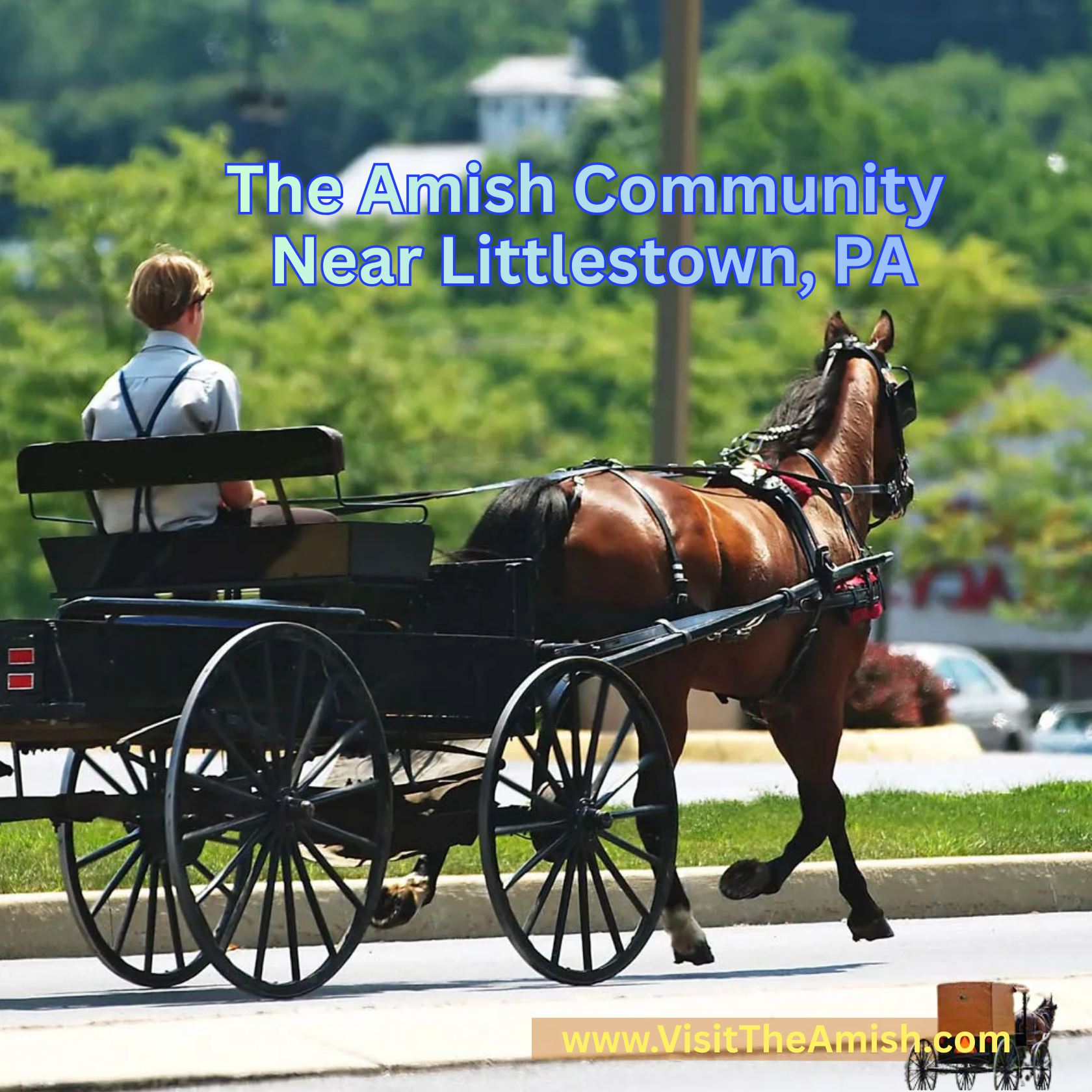
The Amish community near Littlestown, Pennsylvania is small but fast‑growing, with families who have moved west from the Lancaster settlement to find farmland and a quieter pace of life in Adams County. For travelers, that growth has quietly transformed the backroads south and east of town into a gentle, photo‑worthy landscape of greenhouses, farm markets, and horse‑drawn buggies that still feels undiscovered compared with better‑known Amish hubs.newschannel9+1
A young settlement on the rise
Littlestown’s Amish presence dates only to the early 2000s, but the pace of change has been striking. When Amish farmer Amos Stoltzfoos moved his family here in 2020, he recalls being one of about 11 Amish families in the area; today he estimates there are roughly 85–90 families in a settlement that stretches across the state line into Maryland. Researchers at the Young Center for Anabaptist and Pietist Studies have placed the broader settlement’s population at around 225 people, with numbers still climbing as more families look west for land and opportunity.local21news+1
That migration story echoes a wider trend in Pennsylvania: Lancaster County’s booming Amish population has pushed farmland prices up and availability down, encouraging younger households to look for acreage in places like Littlestown where they can both farm and run small businesses. As one scholar put it, new households “just weren’t finding the type of property they’d like to buy” closer to Lancaster, so they followed open fields and reasonable prices farther west. Littlestown’s patchwork of working farms and rural roads offered a natural landing spot.newschannel9

Greenhouses, markets, and farm stands
For visitors, the most visible doors into the Littlestown Amish community are its small but growing cluster of businesses just outside borough limits. Mayor Jennifer Beskid points to Pennland Greenhouse and Kings Farmstead & Market as examples of how recent arrivals have blended traditional skills with customer‑friendly storefronts, along with another family’s simple farmstand without a formal shop. At these stops, travelers can expect seasonal plants, produce, baked goods, and pantry staples that mirror what you’d find in larger Amish regions—just with fewer crowds and a more local feel.local21news+1
Patrons describe Pennland Greenhouse as a place where “you come for tomato starts and leave with an entire plan for your summer garden,” praising both the quality of plants and the patient advice from staff who live the farming life every day. Kings Farmstead & Market, meanwhile, has earned word‑of‑mouth as “the kind of spot where the milk, eggs, and bread taste like they skipped the middleman,” offering a direct line from field and barn to basket. Together with smaller farmstands, these businesses make Littlestown an appealing half‑day destination for anyone who loves farm‑to‑table shopping.newschannel9+1
How the town is responding
Local officials say the community has largely embraced the Amish arrival, even as everyone adjusts to sharing the road with more horse‑drawn buggies. Mayor Beskid acknowledges that there were initial complaints about horse droppings and traffic, but she and the borough manager met directly with one of the Amish business owners to understand practices and share information with residents. After that quiet bit of diplomacy, she reports that negative comments essentially disappeared, replaced by an appreciation for preserved farmland and new market options.newschannel9

Her assessment is straightforward: Littlestown residents seem to like seeing open fields remain in production rather than being paved over, and they value having fresh, local food just beyond town. Amish families, for their part, work with non‑Amish neighbors to spread the word about their markets, often relying on local friends to handle social media and online promotion that they do not manage themselves. One Amish farmer put it simply, noting that his family is “not focused just on our church community, but also the Littlestown community,” and that he hopes never to be seen as standoffish.local21news+1
Life between two worlds
Culturally, the Littlestown settlement shares roots with Lancaster’s Old Order Amish, whose history in Pennsylvania stretches back to the early 1700s when Anabaptist refugees sought religious freedom under William Penn’s invitation. The familiar hallmarks—plain dress, German dialects, one‑room schoolhouses, and a cautious approach to technology—are present here as well, shaped by the same beliefs in adult baptism, nonresistance, and separation from mainstream culture. Yet the tone on the ground is less about distance and more about quiet coexistence, with regular interactions at markets, in local government offices, and on country lanes.discoverlancaster+1
Researchers note that, across Pennsylvania, younger Amish generations are increasingly entrepreneurial, operating greenhouses, carpentry shops, and small manufacturing businesses in addition to traditional farms. In places like Littlestown, that entrepreneurial streak translates into more touchpoints with non‑Amish neighbors and with government agencies—whether for property permits, tax matters, or small‑business programs—while still maintaining church‑based decision‑making and community cohesion. As one expert emphasized, the stereotype of Amish life as purely agrarian and under‑educated is badly outdated; these are communities “proliferating” through both population and business savvy.youtubenewschannel9
Visiting as a respectful traveler
For tourist editors and travelers, Littlestown’s Amish community offers a softer, less commercialized experience than better‑known destinations, which is both its charm and its responsibility. Visitors should plan on simple pleasures: picking up bedding plants and hanging baskets in spring, choosing late‑summer tomatoes or sweet corn from a farmstand, or driving slowly past tidy farmsteads where laundry billows in the breeze and children play in wide yards. It is not the place for bus tours or staged attractions, but rather for those who appreciate the rhythm of rural life.local21news+1
Etiquette matters. Guests are welcome at clearly marked businesses and stands but should avoid photographing people, respect private driveways, and be patient with slower buggy traffic on narrow roads. Cash is often preferred, and hours can be seasonal or tied to farm work, so building flexibility into your itinerary is wise. As one local shopper put it after a morning of greenhouse browsing and market errands, “You don’t come here to see a show; you come to buy something real and leave a little calmer than when you arrived.”newschannel9+1

Check sources
- https://newschannel9.com/news/nation-world/more-pa-amish-families-moving-west-as-population-hits-record-highs-researchers-elizabethtown-college-young-center-for-anabaptist-and-pietist-studies-pennsylvania-lancaster-adams-littlestown-pa
- https://amishamerica.com/maryland-amish/
- https://local21news.com/news/local/amish-farmer-littlestown-community-embrace-growing-amish-population-adams-county-carroll-county-maryland-pennsylvania-pennland-greenhouse-de
- https://www.discoverlancaster.com/amish/history-beliefs/
- https://littlestown.adamscountypa.gov/getmedia/45accaa0-bdd1-4ac4-a574-d83a0b57c6e9/LittlestownHistory.pdf
- https://www.facebook.com/groups/389583837901640/posts/2655266101333391/
- https://www.youtube.com/watch?v=jE0OtExyKco
- https://www.amishvillage.com/about-amish-village/lancaster-county/
- https://www.youtube.com/watch?v=HU7-Vnd_tsU